Vertigo
Vibe
Alfred Hitchcock’s haunting psychological thriller follows former detective Scottie Ferguson, a man crippled by acrophobia who is hired to observe the strangely troubled wife of an old acquaintance. As Scottie becomes increasingly captivated by Madeleine’s beauty, sadness, and apparent connection to a dead woman from the past, his professional curiosity turns into obsession. After a devastating loss, he encounters another woman who seems uncannily similar, drawing him into a deeper labyrinth of identity, desire, and illusion. James Stewart gives one of his darkest and most complex performances, while Kim Novak embodies mystery, vulnerability, and reinvention. With its dreamlike imagery, innovative camera work, and Bernard Herrmann’s hypnotic score, Vertigo remains one of cinema’s most unsettling studies of obsession.
Watch for
- James Stewart’s performance, especially the way Scottie shifts from wary observer to emotionally shattered obsessive without ever losing the character’s underlying fragility.
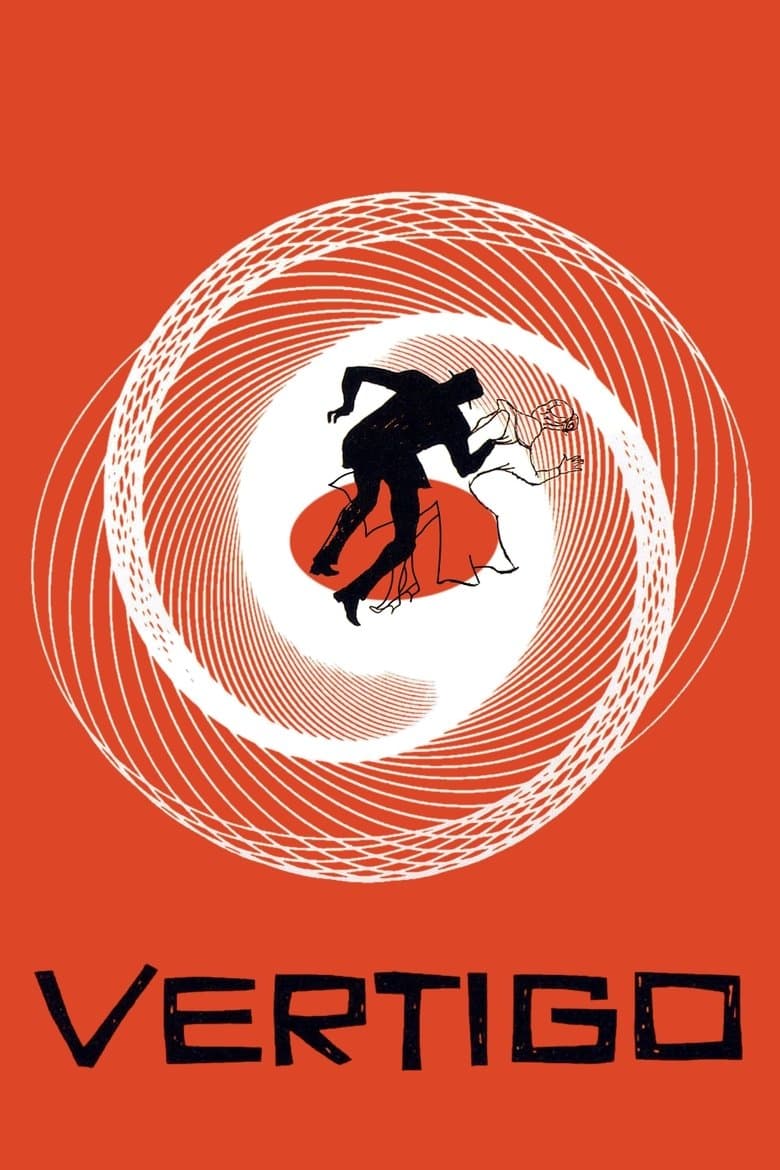
- Hitchcock’s use of color, mirrors, spirals, and repetition, which turn the film into a visual pattern of fixation, doubling, and entrapment.
- Bernard Herrmann’s score, whose romantic sweep and ominous undertow make the film feel suspended between longing and nightmare.
- How the film’s San Francisco locations—staircases, rooftops, cemeteries, hotel rooms, and winding roads—become psychological spaces rather than simple backdrops.
Production notes
Vertigo was Alfred Hitchcock's adaptation of the French novel D'entre les morts ('From Among the Dead') by Pierre Boileau and Thomas Narcejac, with the screenplay by Alec Coppel and Samuel A. Taylor. The film tells the story of John 'Scottie' Ferguson, a San Francisco detective forced to retire from the police force due to acrophobia, hired by an old friend to follow the friend's wife Madeleine, with whom Scottie becomes obsessed. James Stewart played Scottie in his fourth and final Hitchcock film (after Rope, Rear Window, and The Man Who Knew Too Much), with Kim Novak as Madeleine/Judy. The film required extensive location shooting in actual San Francisco locations — Mission Dolores, Fort Point, the Palace of the Legion of Honor, the Big Basin Redwoods — and developed the famous 'Vertigo effect' (now known as a dolly zoom) for the disorienting stairwell-vertigo sequences. Cinematographer Robert Burks shot the film. Composer Bernard Herrmann contributed one of the most influential film scores ever composed. Production cost approximately $2.5 million.
Trivia
- The famous 'Vertigo effect' (now known as a dolly zoom, contra-zoom, or 'Vertigo shot') was developed specifically for the stairwell-vertigo sequences — combining a forward dolly toward the subject with a simultaneous zoom-out — creating a disorienting visual sensation that has since been replicated countless times in subsequent cinema.
- Kim Novak was the second choice for the role of Madeleine/Judy; Vera Miles had originally been cast but became unavailable due to her pregnancy with director John Ford's grandchild. Novak's substitution proved fortunate — her ethereal screen presence and emotional ambiguity have become essential to the film's enduring fascination.
- Vertigo was a commercial and critical disappointment on its 1958 release, with audiences and critics finding the narrative slow and the film's morbid obsession with death uncomfortable; it underperformed at the box office and received only two Academy Award nominations (Best Art Direction and Best Sound), winning neither.
- Sight & Sound's 2012 decennial critics' poll named Vertigo the greatest film ever made — displacing Citizen Kane from the top spot Welles's film had held in every poll since 1962; the elevation reflected decades of growing critical appreciation for the film's psychological complexity and visual sophistication.
- Bernard Herrmann's score for Vertigo is regularly cited as one of the great American film scores; Herrmann's central love-theme repetition and the obsessive-circular structure of the music mirror the film's own thematic concerns with obsession and circular return to lost objects.
Legacy
Vertigo's reputation has perhaps the most dramatic arc of any major American film. It was a commercial and critical disappointment on its 1958 release and received only two Academy Award nominations (winning neither); but its critical reputation has grown so substantially that Sight & Sound's 2012 decennial critics' poll named it the greatest film ever made — displacing Citizen Kane from the top spot Welles's film had held in every poll since 1962. It was selected for the National Film Registry in 1989. The film's specific psychological complexity — Scottie's obsessive remaking of Judy in Madeleine's image, the film's central concern with mortality and the impossibility of resurrecting lost objects — has been continuously studied by critics from Robin Wood to Slavoj Žižek. Bernard Herrmann's score is regularly cited as one of the great American film scores, with its obsessive-circular structure mirroring the film's own thematic concerns. Brian De Palma's Body Double (1984) and Obsession (1976) were explicit homages, and the film's specific visual approach (the dolly zoom, the San Francisco location work, the spiraling-pattern imagery) has been continuously referenced across decades of subsequent cinema.