Titanic
Vibe
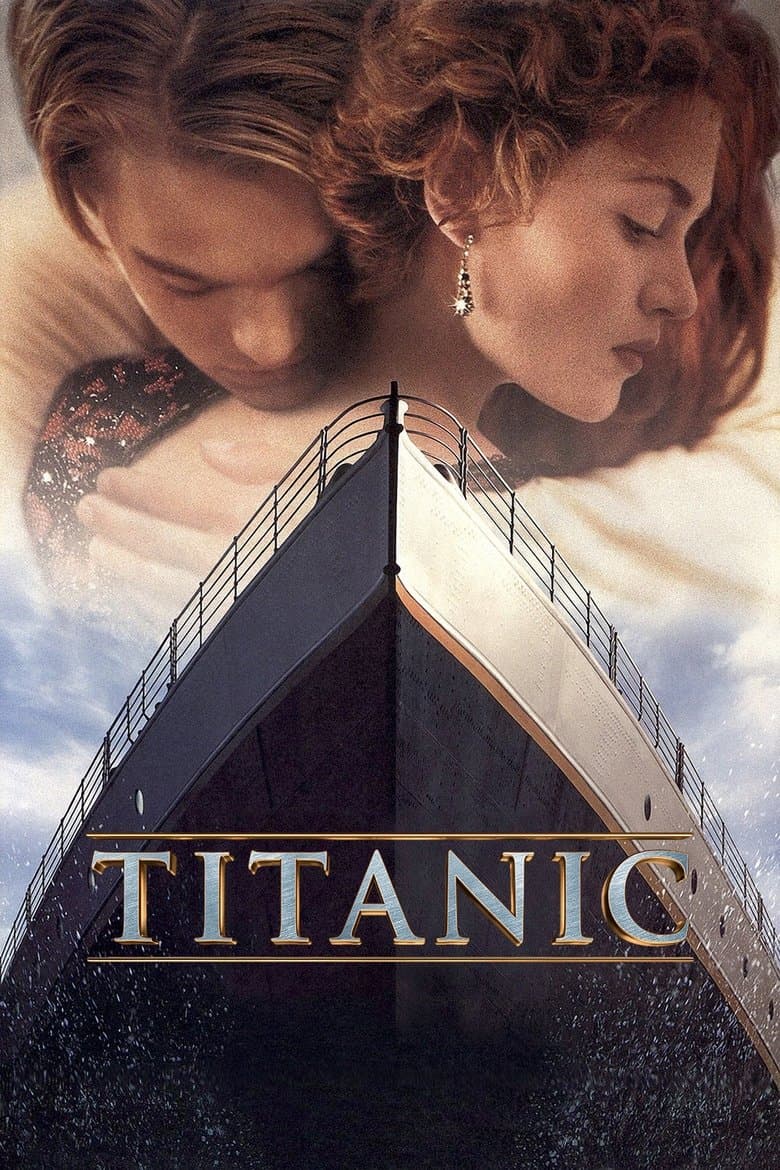
James Cameron’s sweeping historical romance unfolds aboard the RMS Titanic during its doomed 1912 maiden voyage. The film follows Jack Dawson, a restless young artist traveling in steerage, and Rose DeWitt Bukater, an upper-class woman trapped by wealth, duty, and expectation. Their unexpected bond grows within the ship’s dazzling luxury and rigid social hierarchy, turning the voyage into both a love story and a study of class, freedom, and self-determination. When the Titanic strikes an iceberg, the film shifts into a harrowing survival drama of panic, sacrifice, and loss. Blending intimate emotion with spectacular scale and groundbreaking effects, Titanic became one of the most successful and enduring epics in modern cinema.
Watch for
- How Cameron contrasts the elegance and restriction of first class with the warmth, motion, and immediacy of steerage, turning the ship into a fully stratified social world.
- The gradual tonal shift from romantic wonder to mounting dread, especially in the scenes leading up to and immediately following the iceberg collision.
- How production design, camera movement, miniatures, and visual effects combine to make the Titanic feel both monumental and heartbreakingly tangible.
- The way intimate gestures between Jack and Rose continue to carry emotional weight even after the film expands into spectacle, disaster, and mass panic.
Production notes
Titanic was James Cameron's substantial epic — a fictional Romeo-and-Juliet-style romance set against the historical April 14-15, 1912 sinking of the RMS Titanic. Cameron wrote, directed, and co-produced the film, with the substantial production budget reaching approximately $200 million by the time of release — making it the most expensive film ever produced to that point. Twentieth Century Fox and Paramount Pictures co-financed the production after Fox alone had committed and then required substantial additional support. Leonardo DiCaprio played the working-class artist Jack Dawson, with Kate Winslet as the first-class passenger Rose DeWitt Bukater. The cast included Billy Zane as Rose's fiancé Cal Hockley, Kathy Bates as Molly Brown, Frances Fisher as Rose's mother Ruth, Gloria Stuart as the elderly Rose in the framing sequences (her performance earned a Best Supporting Actress nomination at age 87), Bill Paxton as the modern-day treasure hunter Brock Lovett, Bernard Hill as Captain Edward Smith, Victor Garber as ship designer Thomas Andrews, and David Warner as Cal's valet Spicer Lovejoy. The film's substantial production work included a full-scale replica of much of the ship — built at a custom studio facility in Rosarito, Mexico — and substantial visual-effects work by Digital Domain. Cinematographer Russell Carpenter shot the film. Composer James Horner contributed the score, with the song 'My Heart Will Go On' performed by Celine Dion becoming a worldwide hit single.
Trivia
- Titanic became the highest-grossing film of all time on its 1997 release — eventually grossing approximately $2.2 billion worldwide — and held the highest-grossing-film title for approximately twelve years until James Cameron's own Avatar (2009) surpassed it; both Avatar and Titanic remain in the top three highest-grossing films of all time even after subsequent decades of further releases.
- Titanic won eleven Academy Awards on fourteen nominations — tied with Ben-Hur (1959) and subsequently with The Lord of the Rings: The Return of the King (2003) for the most ever won by a single film; the wins included Best Picture, Best Director (Cameron), Best Cinematography (Russell Carpenter), Best Art Direction, Best Costume Design, Best Sound, Best Sound Effects Editing, Best Original Dramatic Score (James Horner), Best Original Song ('My Heart Will Go On'), Best Film Editing, and Best Visual Effects.
- Gloria Stuart's performance as the elderly Rose in the framing sequences was substantial — Stuart was 87 years old when she made the film, and her substantial dramatic work earned her the Best Supporting Actress nomination at the second-oldest age of any nominee in Oscar history (after the 91-year-old May Robson nominated in 1934).
- The song 'My Heart Will Go On' performed by Celine Dion — written by James Horner and Will Jennings — became one of the most thoroughly commercially successful film songs ever released; the song spent 16 weeks at #1 on the Billboard Adult Contemporary chart and won the Academy Award for Best Original Song.
- The film's substantial production budget reached approximately $200 million by the time of release — making it the most expensive film ever produced to that point — and the substantial commercial-and-critical success demonstrated the viability of substantial production-resource commitment for prestige-cinema projects, opening the way to subsequent decades of similar high-budget productions.
Legacy
Titanic won eleven Academy Awards on fourteen nominations — tied for the most ever won by a single film. It grossed approximately $2.2 billion worldwide on its $200 million budget — making it the highest-grossing film of all time for approximately twelve years until James Cameron's own Avatar (2009) surpassed it; both remain in the top three highest-grossing films of all time. It was selected for the National Film Registry in 2017. The film's substantial commercial success substantially demonstrated the viability of substantial production-resource commitment for prestige-cinema projects, opening the way to subsequent decades of similar high-budget productions including James Cameron's own Avatar franchise. Leonardo DiCaprio's central performance launched the substantial second phase of his career — the role established him as a major leading man, opening the way to his subsequent two-decade collaboration with Martin Scorsese and his eventual Best Actor Oscar win for The Revenant (2015). The famous 'I'm flying' bow-of-the-ship sequence and the substantial Heart-of-the-Ocean necklace iconography have become permanent shorthand for romantic-epic cinema. Among James Cameron's films, Titanic remains the most thoroughly Oscar-celebrated.