The Graduate
Vibe
Mike Nichols’s The Graduate captures the disorientation of post-college adulthood through Benjamin Braddock, a recent graduate drifting through the expectations of suburban life. Pressured by family and unsure of his future, Benjamin begins an affair with the sophisticated and disillusioned Mrs. Robinson, only to later fall in love with her daughter Elaine—creating a complicated and deeply uncomfortable romantic triangle. Blending romantic comedy with sharp generational satire, the film reflects the anxieties and shifting social values of late-1960s America. Dustin Hoffman’s understated performance redefined the Hollywood leading man as uncertain and introspective. Paired with Simon & Garfunkel’s iconic soundtrack, The Graduate became a defining film of the New Hollywood movement.
Watch for
- The film’s inventive editing and visual storytelling, including montage sequences that convey Benjamin’s aimless drift through time.
- Simon & Garfunkel’s music, especially “The Sound of Silence,” which reinforces the film’s mood of alienation and introspection.
- Subtle visual symbolism—such as framing Benjamin behind glass, water, or barriers—to emphasize his emotional detachment from the world around him.
- The film’s famous final moments, where shifting expressions reveal the complicated reality behind a seemingly triumphant ending.
Production notes
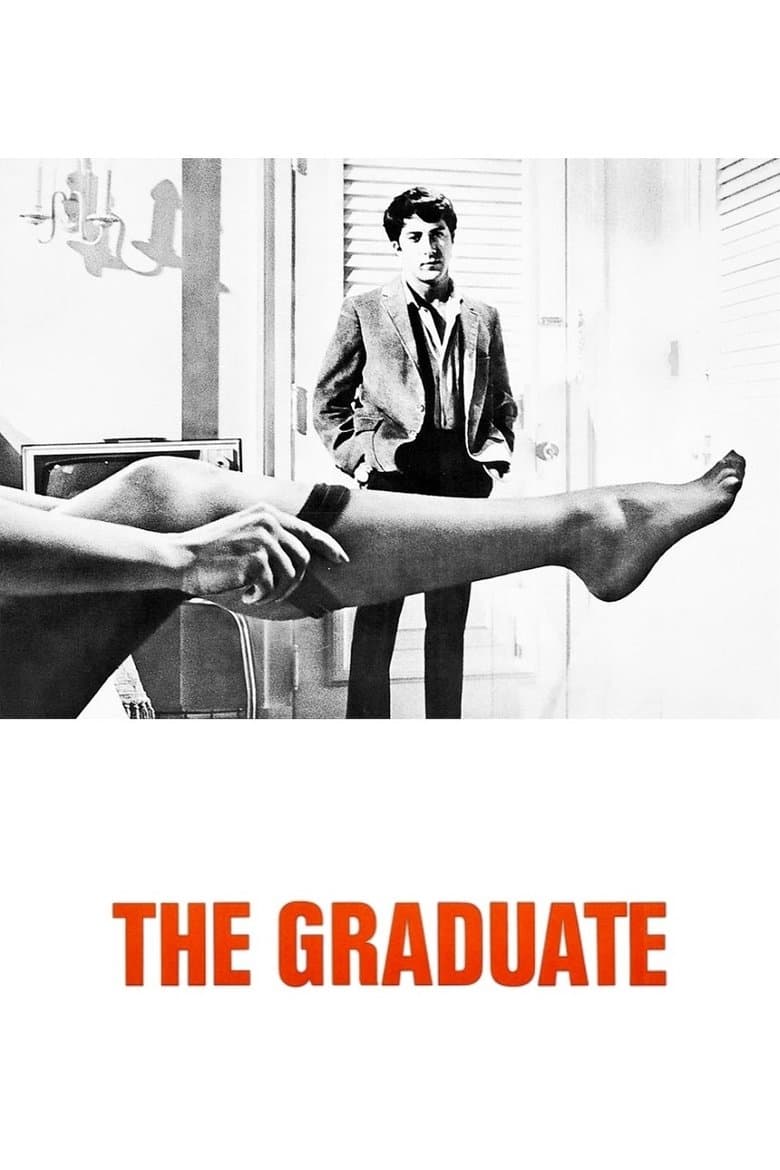
The Graduate was Mike Nichols's second feature film, after his Oscar-nominated debut Who's Afraid of Virginia Woolf? (1966). Nichols adapted Charles Webb's 1963 novel with screenwriters Calder Willingham and Buck Henry, who substantially developed the source's understated tone into the comic rhythms of the finished film. Dustin Hoffman, virtually unknown at the time, was cast as Benjamin Braddock at age 30 — playing 21 — over Nichols's initial preference for Robert Redford. Anne Bancroft was 35 when she played Mrs. Robinson, only six years older than Hoffman, despite the script's implication of a generational gap. Katharine Ross played Elaine Robinson. Cinematographer Robert Surtees's framing — Benjamin trapped in fish-tanks, Mrs. Robinson's leg framing the doorway, the telephoto-compressed church chase — became one of the most influential visual languages in 1960s American film. The Simon and Garfunkel soundtrack, including 'The Sound of Silence,' 'Mrs. Robinson,' and 'Scarborough Fair,' was largely arranged in post-production. Production cost approximately $3 million.
Trivia
- Anne Bancroft was just six years older than Dustin Hoffman when she played his lover Mrs. Robinson — Bancroft was 35, Hoffman was 30 — but the makeup, hair, and costuming worked to suggest the substantial age gap the script implied.
- Mike Nichols's preference for Robert Redford as Benjamin was overruled when Redford failed his screen test — Nichols felt Redford couldn't credibly play a young man whose insecurity drives the plot, and Hoffman's awkward physicality became central to the role.
- The famous 'Plastics' line was reportedly improvised by Buck Henry on the set; the screenplay had a different generic word in the original draft, and the substitution to 'plastics' became one of the most quoted single words in American film history.
- Simon and Garfunkel had not written 'Mrs. Robinson' specifically for the film — the song existed only as a vocal demo titled 'Mrs. Roosevelt'; Nichols asked them to develop it, and the resulting song became one of the biggest hits of 1968.
- The Graduate was the highest-grossing film of 1967 and earned seven Academy Award nominations, with Mike Nichols winning Best Director — the only Oscar the film took home, despite Hoffman's iconic performance and the film's cultural reach.
Legacy
The Graduate became one of the defining films of the New Hollywood era — the moment when youth-oriented, formally adventurous American cinema began displacing the studio-era sensibility that had dominated since the silent period. It grossed over $100 million on initial release (an enormous sum for 1967), won the Best Director Oscar for Mike Nichols, and was selected for the National Film Registry in 1996. The film's central image — Benjamin watching Mrs. Robinson seductively pose, the shot famously framed through her leg — became one of the most reproduced cinematic images of the 1960s, embedded in popular consciousness and referenced in subsequent films and advertising for decades. The Simon and Garfunkel songs became standalone cultural artifacts that have outlived even the film's specific plot. Benjamin's famous final reaction shot, his joyful smile shading into uncertain realization as he and Elaine sit at the back of the bus, has been studied as one of the most ambiguous endings in American cinema. The Graduate remains the canonical text of generational anxiety in mid-twentieth-century American film.