The General
Vibe
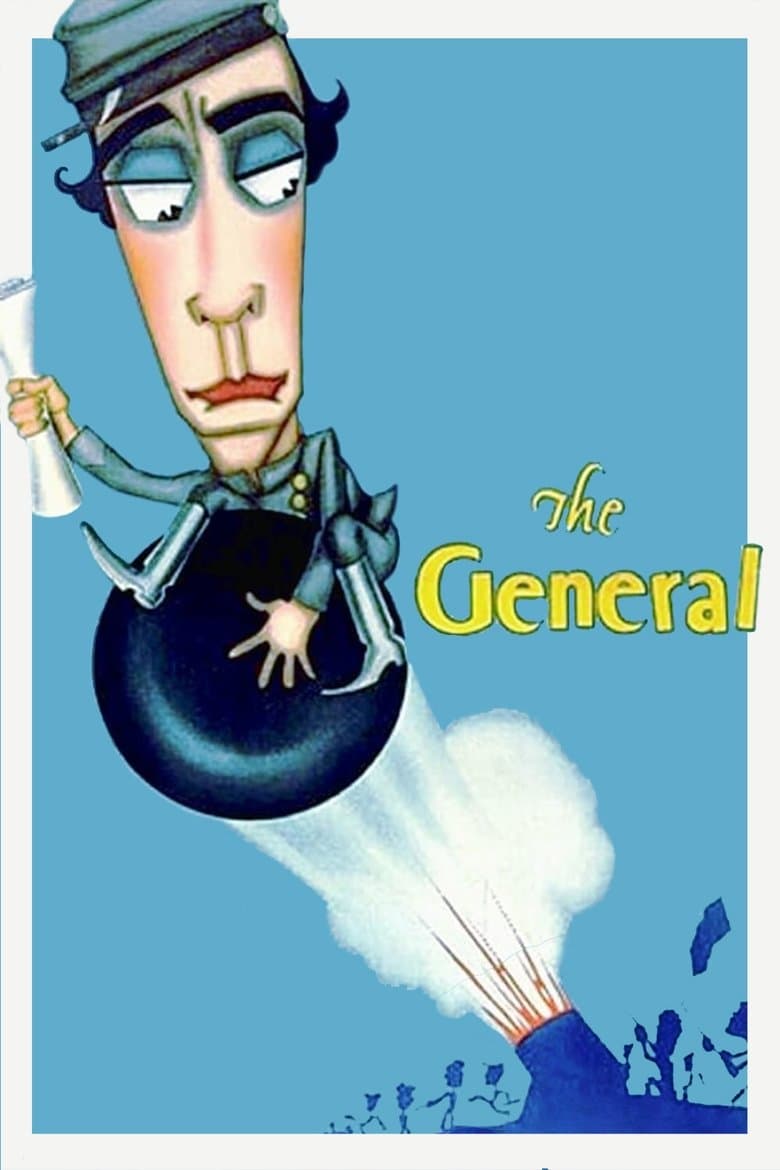
Buster Keaton’s silent comedy masterpiece follows Johnnie Gray, a Confederate railroad engineer whose beloved locomotive, The General, is stolen by Union spies during the Civil War. When his sweetheart Annabelle is taken aboard the train, Johnnie launches a relentless pursuit that becomes one of the most brilliantly sustained chase narratives in film history. Keaton combines deadpan performance, precise visual storytelling, and astonishing stunt work—much of it performed by Keaton himself—to create comedy out of timing, machinery, and physical danger. Initially underappreciated, The General is now regarded as one of silent cinema’s crowning achievements and one of the greatest action comedies ever made.
Watch for
- Keaton’s physical performance, especially the way his stillness and precision make even the most dangerous stunts feel effortless and exact.
- How the film uses trains, tracks, and obstacles to build comic escalation, turning machinery itself into the engine of both suspense and humor.
- The clarity of the chase staging, where geography, motion, and timing are always easy to follow despite the scale and complexity of the action.
- The famous practical stunts and collapsing bridge sequence, which show how silent-era spectacle could feel both monumental and perfectly integrated into the comedy.
Production notes
The General was Buster Keaton's most ambitious silent feature — a Civil War action comedy that Keaton produced through his own production company (then distributed through United Artists), co-directed with Clyde Bruckman, and starred in as the Confederate railroad engineer Johnnie Gray. The screenplay by Keaton, Bruckman, Al Boasberg, and Charles Henry Smith was loosely based on the actual 1862 'Great Locomotive Chase' through Georgia and Tennessee. Keaton's production was extraordinarily ambitious for any 1926 film, with substantial actual-locomotive stunt work — including the famous sequence of a full-size locomotive crashing through a burning bridge into the Row River in Oregon (a single take, with the wrecked train left in place where it remained as a tourist attraction for decades). Marion Mack played the engineer's love interest Annabelle Lee, with Glen Cavender as the Union spy Captain Anderson, Jim Farley as the Union General Thatcher, and Frederick Vroom as a Confederate general. Cinematographers J. Devereaux Jennings and Bert Haines shot the film. Production cost approximately $750,000 — extraordinarily expensive for a silent comedy of the era.
Trivia
- The famous sequence of a full-size locomotive crashing through a burning bridge into the Row River in Oregon was filmed in a single take with the wrecked train left in place — it remained at the bottom of the river as a tourist attraction for decades, until salvage operations during World War II finally removed it for scrap metal.
- Buster Keaton performed almost all of his own stunts on the film — including the sequence in which he sits on the coupling rod of a moving locomotive, the rooftop train-running scenes, and the famous mid-cannon-fire-and-explosions chase; the production was extraordinarily dangerous, and Keaton was repeatedly injured during shooting.
- The General was a substantial commercial and critical disappointment on its 1926 release — grossing approximately $474,264 against its $750,000 budget — and the loss effectively ended Keaton's independent production career; he was forced to sign a contract with MGM that substantially limited his creative control for the rest of his career.
- Buster Keaton's contemporary critical reception was substantially limited by his loss of independent production status after The General's failure; the film's substantial subsequent reputation — as one of the great silent comedies and one of the greatest films of any era — came primarily through critical reassessment in the 1950s and 1960s.
- The General was loosely based on the actual 1862 'Great Locomotive Chase' through Georgia and Tennessee — when Union spies hijacked the Confederate locomotive 'General' and were pursued by Confederate forces; the historical event had been recounted in numerous accounts before Keaton's adaptation, including a 1862 book by William Pittenger that Keaton drew on for production research.
Legacy
The General has aged into one of the most thoroughly respected silent films and one of the canonical American comedies, despite its commercial disappointment on its 1926 release. It was selected for the inaugural class of the National Film Registry in 1989. Sight & Sound's decennial critics' polls have consistently placed The General among the greatest films ever made; the 2012 poll ranked it #34 overall. The film's commercial failure on its 1926 release effectively ended Buster Keaton's independent production career, forcing him to sign a contract with MGM that substantially limited his creative control for the rest of his career; the substantial subsequent reputation of the film has been one of cinema's most thorough critical reversals. Keaton's specific approach to silent-era physical comedy — the extraordinary stunt work, the deadpan emotional register, the integration of action and narrative — has influenced subsequent decades of comic cinema, with direct lineage to Jackie Chan's action-comedy work in Hong Kong cinema and contemporary work from Wes Anderson and the silent passages of Pixar's WALL-E (2008). Among silent comedies, The General sits alongside Charlie Chaplin's The Gold Rush (1925) and City Lights (1931) as the canonical achievements of the form.