Spartacus
Vibe
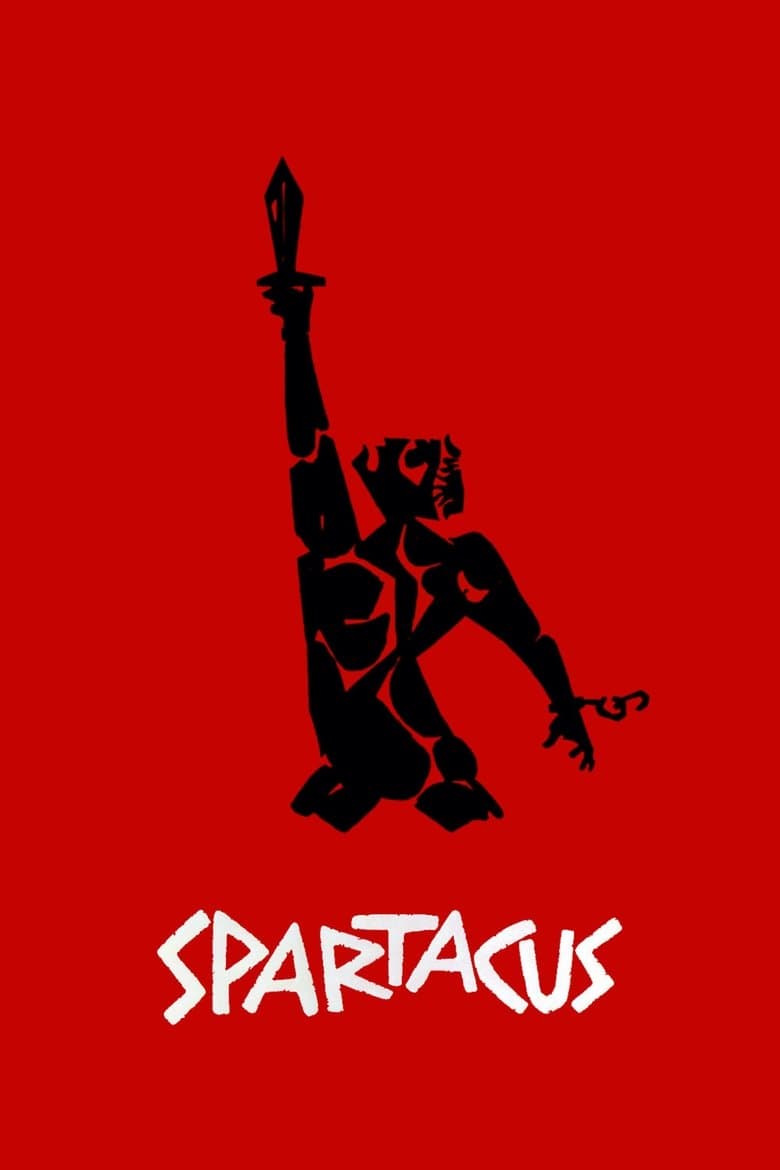
Stanley Kubrick’s historical epic tells the story of Spartacus, a Thracian slave whose defiance ignites a massive rebellion against the Roman Republic. After enduring the cruelty of a gladiator school, Spartacus rises to lead an army of escaped slaves fighting not only for survival but for dignity and freedom. Kirk Douglas brings the title role both physical power and moral conviction, while Kubrick stages the revolt on a grand scale through sweeping battles, imposing Roman spectacle, and Alex North’s stirring score. Beyond its epic scope, Spartacus remains a powerful drama of oppression, resistance, and human worth—and a landmark in Hollywood history for breaking the blacklist through Dalton Trumbo’s screen credit.
Watch for
- Kirk Douglas’s performance, especially the way Spartacus grows from wounded survivor to leader without losing the character’s emotional directness.
- Kubrick’s command of scale in the battle scenes, where formations, landscape, and movement turn military conflict into both spectacle and strategy.
- The contrast between the slaves’ rough, collective humanity and the cold elegance of Roman power, which gives the film much of its visual and moral tension.
- The famous moments of solidarity and sacrifice, where personal loyalty becomes inseparable from the larger political meaning of the revolt.
Production notes
Spartacus was Stanley Kubrick's substantial historical epic — though Kirk Douglas (who produced the film through his Bryna Productions company and starred as the title character) exercised substantial creative control that effectively limited Kubrick's directorial authority. The screenplay was by Dalton Trumbo, then working under the Hollywood blacklist after his 1947 House Un-American Activities Committee conviction; Douglas's substantial decision to credit Trumbo openly under his own name was substantial in the eventual ending of the blacklist. Kirk Douglas played Spartacus, the Thracian slave who leads a substantial uprising against the Roman Republic in 73 BCE. The cast included Laurence Olivier as the Roman general Marcus Licinius Crassus, Jean Simmons as the slave Varinia (Spartacus's wife), Tony Curtis as the slave Antoninus, Charles Laughton as the Roman senator Gracchus, Peter Ustinov as the slave-trader Lentulus Batiatus, and John Gavin as the future Emperor Julius Caesar. The famous closing 'I'm Spartacus!' sequence — in which captured rebel slaves individually claim to be the leader to protect his identity — has become one of the most-quoted moments in any historical epic. Cinematographer Russell Metty shot the film. Composer Alex North contributed the score. Production cost approximately $12 million.
Trivia
- Dalton Trumbo was working under the Hollywood blacklist when he wrote Spartacus — after his 1947 House Un-American Activities Committee conviction — and Kirk Douglas's substantial decision to credit Trumbo openly under his own name was central to the eventual ending of the blacklist; President-elect John F. Kennedy publicly attended a Washington screening in 1961, providing substantial political validation.
- The famous closing 'I'm Spartacus!' sequence — in which captured rebel slaves individually claim to be the leader to protect his identity — was substantially Stanley Kubrick's contribution to the production; the sequence has become one of the most-quoted moments in any historical epic and has been continuously referenced and parodied across decades of subsequent media.
- Stanley Kubrick exercised substantially limited directorial authority during the production — Kirk Douglas, as star and producer, held substantial creative control, and Kubrick himself reportedly considered the film substantially compromised from his preferred creative approach; Kubrick subsequently rarely worked with major-star producer-actors who could limit his creative autonomy.
- Spartacus was the first major Hollywood film to substantially preserve openly homoerotic content in its initial release; the famous 'snails and oysters' bath sequence between Tony Curtis's Antoninus and Laurence Olivier's Crassus — implying Crassus's bisexuality through Roman terms — was cut from the original release after Production Code concerns, and only restored in 1991 (with Anthony Hopkins re-dubbing Olivier's voice after Olivier's 1989 death).
- Spartacus won four Academy Awards including Best Supporting Actor (Peter Ustinov), Best Cinematography (Color), Best Art Direction, and Best Costume Design; it received six total nominations and grossed approximately $60 million on its $12 million budget.
Legacy
Spartacus won four Academy Awards including Best Supporting Actor for Peter Ustinov. It was selected for the National Film Registry in 2017. The film was substantial in the eventual ending of the Hollywood blacklist — Kirk Douglas's substantial decision to credit screenwriter Dalton Trumbo openly under his own name (after Trumbo had been working under the blacklist for over a decade) was central to the political process; President-elect John F. Kennedy publicly attended a Washington screening in 1961, providing substantial political validation for the blacklist's end. The famous 'I'm Spartacus!' sequence has become one of the most-quoted moments in any historical epic, continuously referenced and parodied across decades of subsequent media. Among Stanley Kubrick's films, Spartacus is regularly cited as the production where he had substantially limited creative authority — and the experience shaped his subsequent insistence on substantial creative autonomy for the rest of his career. Among Roman-historical-epic productions of the late studio era, Spartacus sits alongside Ben-Hur (1959) and Cleopatra (1963) as the canonical achievements of the form, though Spartacus's substantial political subtext makes it the most thoroughly intellectually ambitious of the three.