Rocky
Vibe
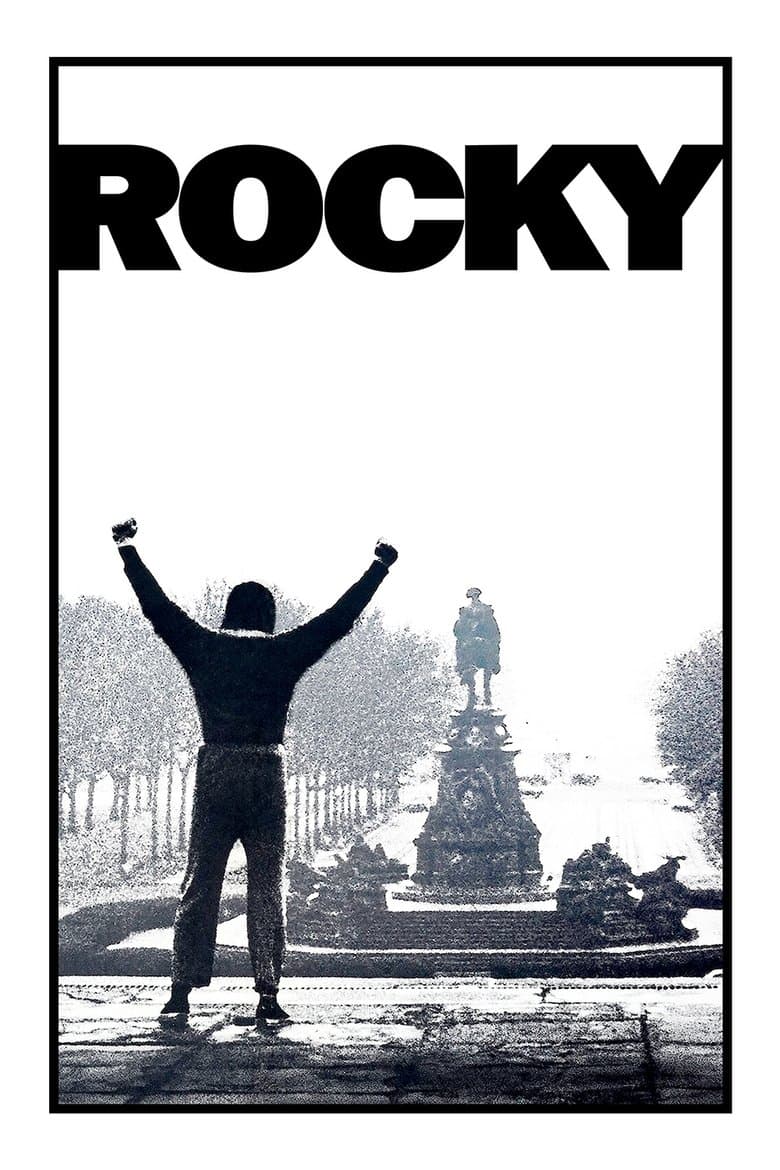
John G. Avildsen’s inspiring sports drama follows Rocky Balboa, a small-time Philadelphia boxer and debt collector whose life changes when he is unexpectedly chosen to fight heavyweight champion Apollo Creed. What begins as a publicity stunt becomes, for Rocky, a rare chance to prove his worth to himself and to the people around him. Sylvester Stallone’s screenplay and performance give the character a bruised tenderness that turns the film into more than a boxing story: it is a portrait of loneliness, self-respect, and hard-won hope. With its iconic training montage and unforgettable score, Rocky remains one of cinema’s most beloved underdog dramas.
Watch for
- Sylvester Stallone’s performance, especially the way Rocky’s mumbling humor, physical awkwardness, and emotional openness make him feel vulnerable rather than conventionally heroic.
- How the Philadelphia locations ground the film in a specific working-class world, making Rocky’s aspirations feel inseparable from the city around him.
- The evolving relationship between Rocky and Adrian, which gives the film much of its tenderness and turns the story into a romance as much as a boxing drama.
- The famous training sequences, where editing, music, and movement gradually turn private effort into mythic momentum without losing the character’s humanity.
Production notes
Rocky was John G. Avildsen's adaptation of Sylvester Stallone's original screenplay — and the story of how Stallone got the role himself has become Hollywood legend. United Artists had offered Stallone approximately $360,000 for the screenplay alone but refused to allow him to star (the studio preferred Burt Reynolds, Robert Redford, or Steve McQueen); Stallone insisted on starring himself, and the studio eventually agreed for a substantially reduced screenplay fee of $35,000 plus his lead-actor salary of approximately $400 per week. The film was made for approximately $960,000 — a deliberately modest budget — and shot in Philadelphia over approximately 28 days. The cast included Talia Shire (Adrian Pennino), Burt Young (Paulie), Burgess Meredith (the trainer Mickey Goldmill), Carl Weathers (the heavyweight champion Apollo Creed), and Joe Spinell (the loan-shark Tony Gazzo). The famous training-montage sequences (including the iconic Philadelphia Museum of Art stairs run) and the climactic title-fight sequence have become some of the most-quoted moments in American cinema. Cinematographer James Crabe shot the film. Composer Bill Conti contributed the iconic 'Gonna Fly Now' theme.
Trivia
- Sylvester Stallone insisted on starring in his own screenplay despite United Artists's preference for an established star (Burt Reynolds, Robert Redford, and Steve McQueen had been considered); the studio eventually agreed for a substantially reduced screenplay fee of $35,000 plus Stallone's lead-actor salary of approximately $400 per week.
- The famous training-montage sequence with the Philadelphia Museum of Art stairs has become permanent visual shorthand for athletic perseverance; the museum's stairs themselves have become a major Philadelphia tourist destination, with thousands of visitors each year recreating the run.
- Carl Weathers's performance as the heavyweight champion Apollo Creed was substantially based on Muhammad Ali — including the boastful self-promotion, the rope-a-dope strategy, and the substantial physical presence; Weathers had been a professional NFL linebacker before turning to acting and brought authentic athletic credibility to the role.
- Rocky was a substantial commercial success, grossing approximately $225 million worldwide on its $960,000 budget; the success launched the Rocky franchise that would extend to multiple sequel films (Rocky II through Rocky V, plus Rocky Balboa, Creed, Creed II, and Creed III) across more than forty years, with cumulative franchise grosses exceeding $1.5 billion.
- Rocky won three Academy Awards including Best Picture, Best Director (John G. Avildsen), and Best Film Editing; the Best Picture win has been continuously discussed as a controversial decision, with Network and Taxi Driver among the stronger 1976 contenders, and Sylvester Stallone himself receiving Best Actor and Best Original Screenplay nominations (losing both).
Legacy
Rocky won three Academy Awards including Best Picture, Best Director (John G. Avildsen), and Best Film Editing. It grossed approximately $225 million worldwide on its $960,000 budget — one of the most profitable American films ever produced relative to its costs. It was selected for the National Film Registry in 2006. The Best Picture win has been continuously discussed as a controversial decision, with Network and Taxi Driver among the stronger 1976 contenders; the win was widely seen as Hollywood's embrace of the underdog narrative and its rejection of the more pessimistic and morally complex New Hollywood mode that Network and Taxi Driver represented. The Philadelphia Museum of Art stairs have become permanent visual shorthand for athletic perseverance, and the museum installed a Rocky statue at the base of the stairs in 1980 to commemorate the film. The Rocky franchise has extended to multiple sequel films across more than forty years, with the Creed sub-franchise (2015, 2018, 2023) starring Michael B. Jordan as the son of Apollo Creed having extended the property into a new generation. Among American sports films, Rocky remains the canonical text.