It's a Wonderful Life
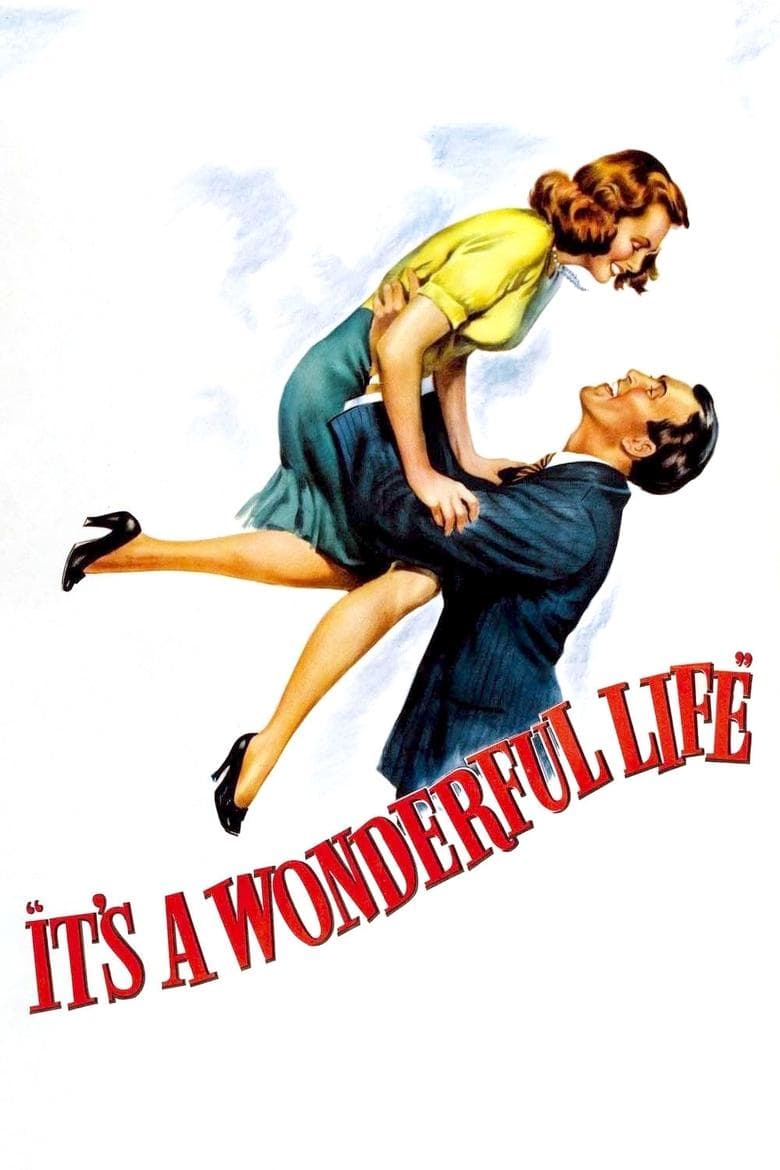
Vibe
Frank Capra’s beloved holiday classic follows George Bailey, a generous small-town banker in Bedford Falls whose lifelong devotion to family and community leaves him feeling trapped and unfulfilled. After a financial crisis pushes him to the brink of despair on Christmas Eve, George is visited by a guardian angel named Clarence. Through a remarkable vision of a world in which George was never born, Clarence reveals how deeply one ordinary life can shape countless others. Anchored by James Stewart’s deeply emotional performance, the film blends fantasy with heartfelt drama to explore themes of sacrifice, community, and personal worth. Once a modest box-office performer, It’s a Wonderful Life has become one of the most enduring and cherished films in American culture.
Watch for
- The alternate-reality sequence showing Bedford Falls without George, which powerfully visualizes the ripple effects of one life.
- James Stewart’s emotional range as George Bailey, especially in moments of frustration, desperation, and eventual redemption.
- Capra’s blend of warmth, humor, and moral reflection that defines the film’s tone.
- Recurring imagery of community spaces—the bank, Main Street, and George’s home—which reinforce the film’s themes of belonging and shared responsibility.
Production notes
It's a Wonderful Life was Frank Capra's first film after his return from World War II military service, and the first feature from Liberty Films, the independent production company he had co-founded with George Stevens, William Wyler, and Sam Briskin. The screenplay, by Frances Goodrich, Albert Hackett, Jo Swerling, and Capra himself, adapted Philip Van Doren Stern's privately-printed 1943 short story 'The Greatest Gift.' James Stewart played George Bailey in his first post-war film role — Stewart had served as a B-17 bomber pilot and had been deeply traumatized by his combat experience, and Capra has said the role was deliberately structured to give Stewart space to channel that complex emotional state. Donna Reed played Mary, with Lionel Barrymore as Mr. Potter and Henry Travers as Clarence the angel. Cinematographer Joseph Walker shot the film. Composer Dimitri Tiomkin scored it. The film's snowy Christmas Eve sequences used a new chemical-foam snow developed for the production. Production cost approximately $3.18 million.
Trivia
- The film was Frank Capra's first project after his World War II military service — Capra had supervised the Why We Fight propaganda series — and James Stewart's first post-combat role; Stewart had served as a B-17 bomber pilot and had returned visibly affected by the experience.
- It's a Wonderful Life was a commercial disappointment on initial 1946 release, losing approximately $480,000 for RKO — Liberty Films's distribution partner; the loss helped sink Capra's independent production company within a few years.
- The film became a Christmas tradition only after a clerical error allowed its copyright to lapse in 1974; television stations could broadcast it for free during the next 17 years, leading to massive holiday-season runs that built the cultural following the film's original release had failed to generate.
- The chemical foam snow used in the film — developed by RKO special effects supervisor Russell Shearman from soap and water mixed with sugar — became the industry-standard snow effect for the next several decades, replacing the painted-cornflakes approach used in earlier films.
- It's a Wonderful Life received five Academy Award nominations including Best Picture, Best Director, and Best Actor (Stewart) but won none; it lost the major awards to The Best Years of Our Lives, William Wyler's similar postwar drama.
Legacy
It's a Wonderful Life's cultural legacy is one of the most distinctive in American cinema — built almost entirely on a clerical-error copyright lapse in 1974 that allowed television stations to broadcast it for free during the next 17 years, creating the Christmas-broadcast tradition that embedded it in American holiday consciousness. The 1991 copyright restoration brought NBC's exclusive annual broadcast that has continued ever since. The film was selected for the National Film Registry in 1990. Among American films, it occupies a uniquely intergenerational position — a film whose cultural salience grew from disappointing 1946 commercial reception to Christmas-canon status across subsequent decades. Its central narrative — George Bailey shown what the world would have looked like without him — has been imitated, parodied, and quoted across television (notably the Saturday Night Live and Cheers parodies), film, and advertising for over fifty years. The film's Pottersville alternative-reality sequence has become a permanent reference for what happens when individual moral agency collapses. Among Frank Capra's films, It's a Wonderful Life is the late-career masterwork.