Chinatown
Vibe
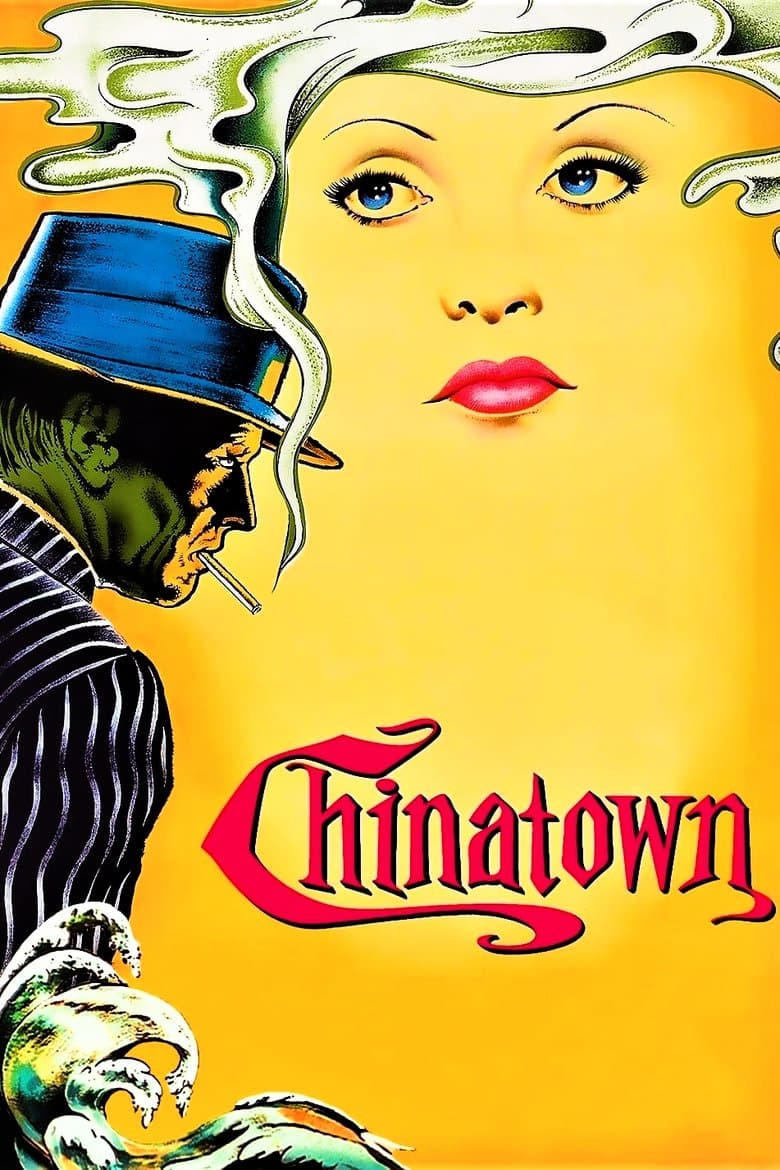
Roman Polanski’s neo-noir mystery follows private detective Jake Gittes as he takes what appears to be a routine adultery case in 1930s Los Angeles. The investigation quickly unravels into a far-reaching conspiracy involving water rights, political corruption, and the disturbing secrets of a powerful family. Jack Nicholson’s performance as the sharp but increasingly overwhelmed Gittes anchors the film, while Robert Towne’s Oscar-winning screenplay builds a layered puzzle of deception and moral ambiguity. Polanski evokes the atmosphere of classic film noir while pushing the genre toward a darker, more cynical vision. With its haunting final line and bleak conclusion, Chinatown remains one of the most powerful detective stories ever filmed.
Watch for
- Jack Nicholson’s performance as Jake Gittes, whose confidence gradually gives way to confusion and helplessness.
- The film’s careful use of point-of-view storytelling, where the audience only learns what Gittes discovers.
- Subtle visual clues and dialogue that slowly reveal the deeper conspiracy behind the water scandal.
- The devastating final sequence in Chinatown, where the film’s themes of power and inevitability reach their tragic conclusion.
Production notes
Chinatown was Roman Polanski's first American feature after Rosemary's Baby (1968) — he had returned to the U.S. after the 1969 Manson Family murder of his wife Sharon Tate, an event that shaped his approach to the dark, despairing tone of the project. Robert Towne wrote the screenplay over an extended period; his original draft was substantially longer, and Polanski's revisions — particularly the famously bleak ending — were initially opposed by Towne but ultimately accepted as the film's definitive version. Jack Nicholson played private detective J.J. 'Jake' Gittes, with Faye Dunaway as Evelyn Mulwray and John Huston in a remarkable performance as Noah Cross, the patriarch villain loosely modeled on water magnate William Mulholland. The film's plot was inspired by the early-twentieth-century California Water Wars, in which Los Angeles secretly diverted water from the Owens Valley to feed metropolitan growth. Cinematographer John A. Alonzo shot the film in deliberately authentic 1937 Los Angeles locations. Composer Jerry Goldsmith contributed the score, with the iconic main theme. Production cost approximately $6 million.
Trivia
- Robert Towne's original screenplay had a less devastating ending than what appears in the final film; Roman Polanski rewrote the conclusion against Towne's strong objections, reflecting his own despair following his wife Sharon Tate's 1969 murder by the Manson Family.
- John Huston, who plays the patriarch villain Noah Cross, was Polanski's deliberate choice partly because of Huston's actual paternal relationship with Anjelica Huston (Nicholson's then-girlfriend); the casting added a layer of personal psychological resonance to the film's incest subplot.
- Chinatown's plot was inspired by the early-twentieth-century California Water Wars, in which Los Angeles secretly diverted water from the Owens Valley to feed metropolitan growth — a real political conspiracy that was substantially obscured in popular memory until the film brought it to mainstream attention.
- The famous closing line — 'Forget it, Jake. It's Chinatown.' — became one of the most-quoted endings in American cinema; the line crystallizes the film's thesis that powerful people escape consequences while ordinary people suffer, and the line's bleak resonance has only grown over time.
- Chinatown received eleven Academy Award nominations and won only one — Best Original Screenplay for Robert Towne; the awards were dominated that year by The Godfather Part II, with Chinatown taking home only the screenplay prize despite the strong field of acting performances.
Legacy
Chinatown is widely regarded as the masterpiece of 1970s American neo-noir cinema — a film that fused classic detective-genre conventions with the darker political and emotional sensibility of the post-Watergate era. It received eleven Academy Award nominations and won only one (Best Original Screenplay for Robert Towne), but its critical reputation has only grown over decades. The film was selected for the National Film Registry in 1991. Robert Towne's screenplay has been continuously studied as the canonical American screenplay — perhaps the most-taught example in screenwriting MFA programs — and the famous closing line 'Forget it, Jake. It's Chinatown.' has become permanent shorthand for the corruption of powerful institutions and the helplessness of individuals against them. The 1990 sequel The Two Jakes, also starring Jack Nicholson but directed by him rather than Polanski, was a commercial and critical disappointment that confirmed the original's singular achievement. Among American films of the 1970s, Chinatown sits alongside The Godfather, Apocalypse Now, and Taxi Driver as the high-water marks of the era's serious dramatic cinema.