Casablanca
Vibe
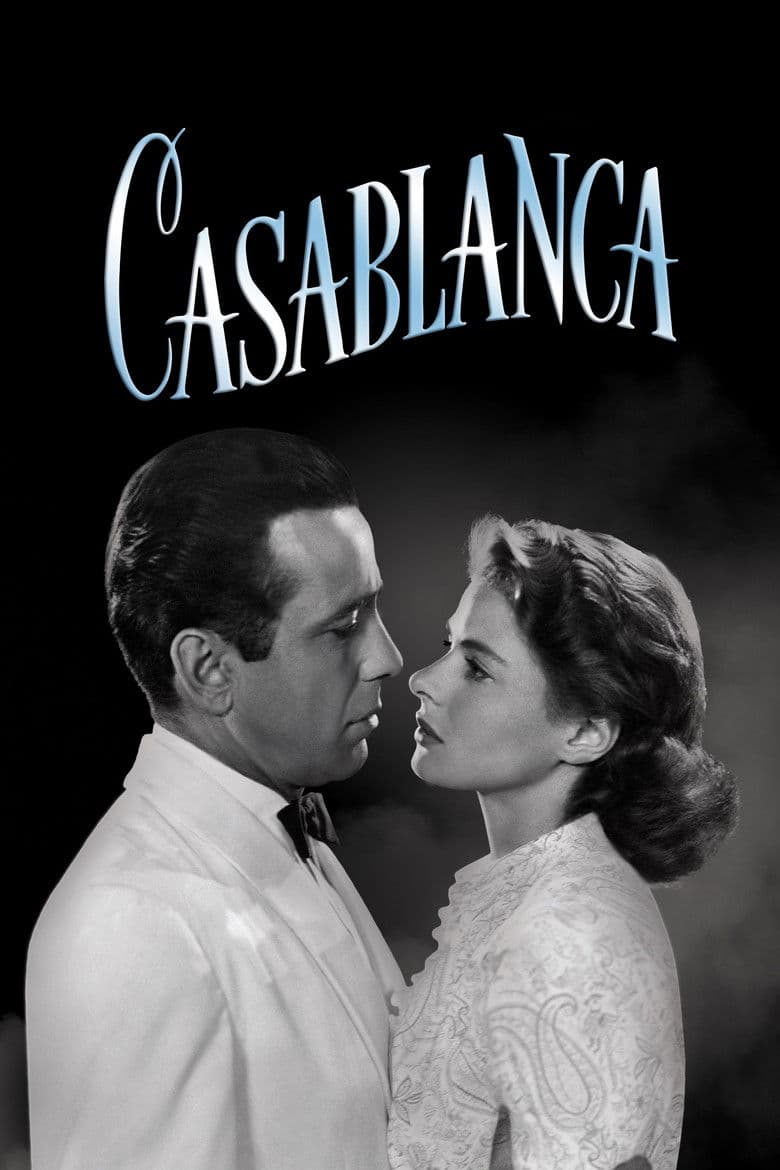
Set during World War II in the Moroccan transit city of Casablanca, this classic romantic drama centers on Rick Blaine, an American expatriate who runs the popular nightclub Rick’s Café Américain. The café attracts refugees, soldiers, and opportunists all hoping to secure passage out of Nazi-controlled Europe. Rick maintains a carefully cultivated neutrality—until the unexpected arrival of his former lover Ilsa Lund and her husband, resistance leader Victor Laszlo. Forced to confront unresolved feelings and mounting political pressure, Rick must choose between personal love and helping a greater cause. Directed by Michael Curtiz and starring Humphrey Bogart and Ingrid Bergman, Casablanca blends romance, suspense, and wartime intrigue into a timeless story of sacrifice, moral courage, and enduring love.
Watch for
- Humphrey Bogart’s transformation from detached cynic to reluctant hero, revealed through subtle performance shifts and quiet moral choices.
- The layered atmosphere inside Rick’s Café Américain, where refugees, soldiers, gamblers, and spies create a constant sense of tension and intrigue.
- Memorable lines and moments of classic Hollywood dialogue, including the emotionally charged scenes built around the song “As Time Goes By.”
- The famous airport finale, where lighting, fog, and restrained performances combine to deliver one of the most iconic endings in film history.
Production notes
Casablanca was a Warner Bros. production directed by Michael Curtiz, the prolific Hungarian-born studio veteran who had already made dozens of features for the studio. The screenplay, by twins Julius and Philip Epstein and Howard Koch, adapted Murray Burnett and Joan Alison's unproduced stage play 'Everybody Comes to Rick's.' The script was famously incomplete during shooting: the Epsteins reportedly handed Ingrid Bergman pages on the morning of filming, and the ending was not decided until late in production. Humphrey Bogart and Bergman were paired with what would become iconic chemistry; Paul Henreid played Victor Laszlo, with Claude Rains as Captain Renault, Conrad Veidt as Major Strasser, Sydney Greenstreet as Ferrari, and Peter Lorre as Ugarte. Max Steiner composed the score. Many of the film's supporting players — including Veidt, Lorre, and Henreid — were themselves European refugees fleeing the Nazis, lending the production an authentic political weight. The film cost approximately $1 million.
Trivia
- Many of the film's supporting actors and extras were genuine European refugees from Nazi-occupied Europe; the iconic 'La Marseillaise' singing scene drew real tears from cast members because they were singing against actors playing the very regime they had fled.
- Casablanca was originally just one of dozens of features Warner Bros. produced that year — neither the studio nor the cast considered it especially distinguished during production, and Bogart was reportedly uncomfortable in the role of romantic lead.
- The famous closing line — 'Louis, I think this is the beginning of a beautiful friendship' — was added by producer Hal Wallis after principal photography wrapped, and recorded by Bogart in dub three weeks after filming ended.
- The film won three Academy Awards — Best Picture, Best Director (Curtiz), and Best Adapted Screenplay — at the 16th Academy Awards in 1944, defeating The Song of Bernadette and For Whom the Bell Tolls.
- The line 'Play it again, Sam' is never actually spoken in the film; the closest dialogue is Ilsa's 'Play it once, Sam, for old times' sake' and Rick's 'You played it for her, you can play it for me. Play it.'
Legacy
Casablanca's reputation grew over decades of repertory revival, television broadcast, and home-video circulation, ascending from solid contemporary success to one of the most beloved films in American cinema. It won three Academy Awards including Best Picture and was selected for the inaugural class of the National Film Registry in 1989. The Lehigh University tradition of midnight Casablanca screenings — repeated at universities across the country — created an ongoing rediscovery cycle for successive generations of American college students. Its place in romantic-film iconography has been extraordinarily enduring: the airport farewell, the smoke-curling cynicism of Rick's American Café, the tension between political duty and personal desire — these have become permanent elements of how American cinema imagines wartime romance. The film is regularly cited as the most-quoted film in American cinema, with phrases like 'Here's looking at you, kid,' 'We'll always have Paris,' and 'Round up the usual suspects' embedded in everyday speech. Its 1992 sequel attempt and various remake projects have all foundered, leaving the original singular.