Cabaret
Vibe
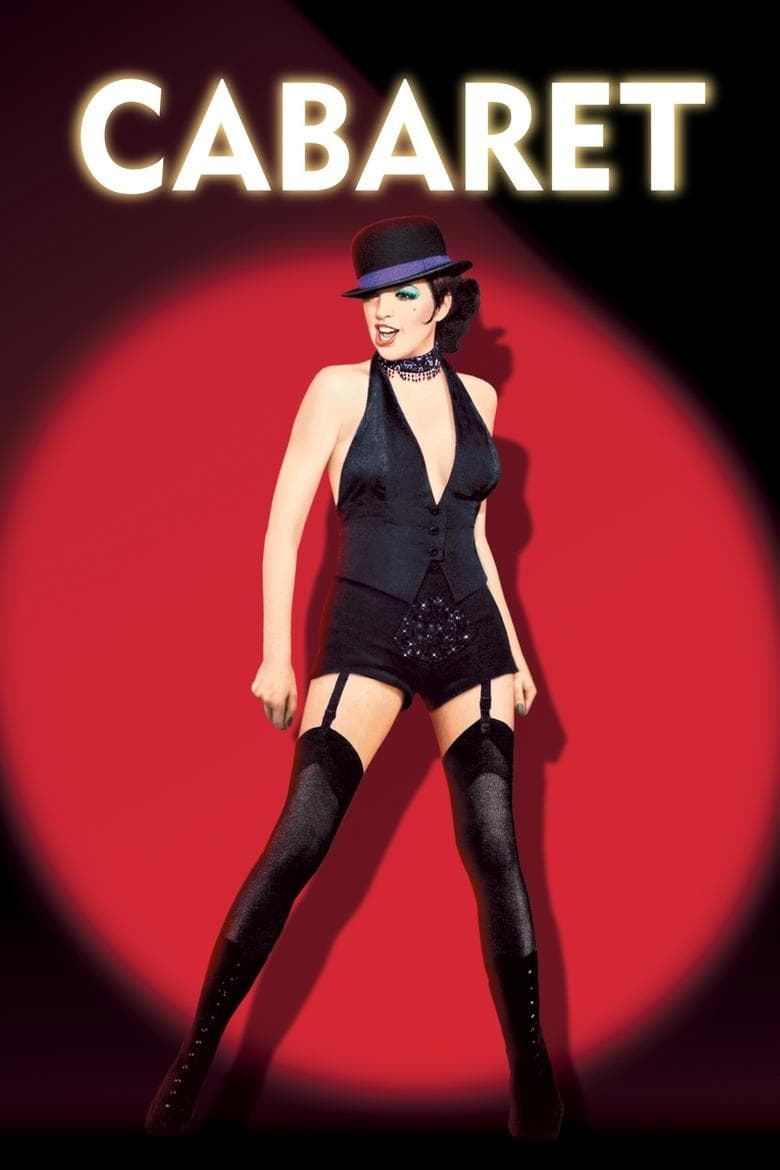
Set in Berlin during the final years of the Weimar Republic, Cabaret follows American nightclub performer Sally Bowles as she drifts through romance, ambition, and denial while the world around her grows increasingly unstable. Much of the film unfolds in and around the Kit Kat Klub, where musical numbers serve not as escapist interruption but as dark reflections of a society sliding toward fascism. Directed by Bob Fosse, the film broke sharply from the traditional Hollywood musical with its sensual choreography, fragmented editing, and ominous political undercurrent. Liza Minnelli’s magnetic performance as Sally helped make Cabaret one of the most daring and influential musicals ever put on screen.
Watch for
- How nearly every musical number inside the Kit Kat Klub functions as a distorted mirror of the story outside it, turning entertainment into commentary.
- Liza Minnelli’s performance as Sally Bowles, especially the way glamour, fragility, and self-invention coexist beneath her bravado.
- Fosse’s use of editing, gesture, and choreography, which gives the musical scenes a jagged, seductive energy unlike the fluid style of classic Hollywood musicals.
- The gradual shift in atmosphere as political danger moves from background presence to unavoidable reality, tightening the film’s emotional and moral stakes.
Production notes
Cabaret was Bob Fosse's adaptation of the 1966 Kander and Ebb Broadway musical (which had itself adapted Christopher Isherwood's 1939 stories of his Berlin years through the John Van Druten stage play I Am a Camera). The screenplay was credited to Jay Presson Allen, with substantial restructuring from the source musical — most notably moving all the songs into the cabaret performances themselves, removing the conventional musical's tradition of characters breaking into song in everyday situations. The film stars Liza Minnelli as the American expatriate cabaret singer Sally Bowles, with Michael York as the British academic Brian Roberts (Sally's love interest), Helmut Griem as the wealthy German aristocrat Maximilian von Heune, Marisa Berenson as the wealthy Jewish heiress Natalia Landauer, Fritz Wepper as the working-class German Fritz Wendel, and Joel Grey as the Kit Kat Klub's Master of Ceremonies (reprising his Tony-winning Broadway role). Cinematographer Geoffrey Unsworth shot the film. Composer John Kander and lyricist Fred Ebb's songs from the Broadway musical (with substantial new material) provided the music. Production cost approximately $6 million.
Trivia
- Cabaret restructured all the songs into the cabaret performances themselves — removing the conventional musical's tradition of characters breaking into song in everyday situations; the structural choice was Bob Fosse's deliberate revision of the source Broadway musical and has been continuously cited as a substantial innovation in the form.
- Liza Minnelli was Vincente Minnelli and Judy Garland's daughter; Cabaret's Best Actress Oscar win was her substantial breakthrough into adult dramatic roles, and the role established her as a major leading lady after several years of more limited Hollywood work.
- Joel Grey reprised his Tony-winning Broadway role as the Kit Kat Klub's Master of Ceremonies — the only original Broadway cast member to appear in the film adaptation; Grey's performance won him the Academy Award for Best Supporting Actor, making him only the second actor to win an Oscar for reprising a stage role originally created on Broadway.
- Cabaret won eight Academy Awards including Best Director (Bob Fosse), Best Actress (Liza Minnelli), and Best Supporting Actor (Joel Grey) — but did not win Best Picture, which went to The Godfather; Cabaret remains one of the few films in Oscar history to win Best Director without winning Best Picture, an outcome that has been continuously discussed.
- The film was Bob Fosse's first major Hollywood directorial credit after substantial Broadway success; Fosse won the 1972 Best Director Oscar for Cabaret while simultaneously winning the Tony Award for Pippin and the Emmy Award for the TV special Liza with a Z — making him the only person to win those three major American entertainment awards in the same year.
Legacy
Cabaret won eight Academy Awards including Best Director (Bob Fosse), Best Actress (Liza Minnelli), and Best Supporting Actor (Joel Grey) — though it lost Best Picture to The Godfather; Cabaret remains one of the few films in Oscar history to win Best Director without winning Best Picture. It was selected for the National Film Registry in 1995. The film's substantial structural innovation — moving all the songs into the cabaret performances themselves, removing the conventional musical's tradition of characters breaking into song in everyday situations — has been continuously cited as a foundational text of revisionist musical-cinema. Bob Fosse's specific aesthetic — the eroticized, deliberately decadent performance register, the substantial integration of choreography with dramatic narrative, the morally complex depiction of pre-Nazi Berlin's nightlife scene — became the template for subsequent revisionist musicals from All That Jazz (1979, Fosse's own follow-up) to Moulin Rouge! (2001) to Chicago (2002, another Kander-Ebb-Fosse property). Among 1970s American musicals, Cabaret sits alongside Fiddler on the Roof (1971) and All That Jazz (1979) as the canonical achievements of the form.