The Wild Bunch
Vibe
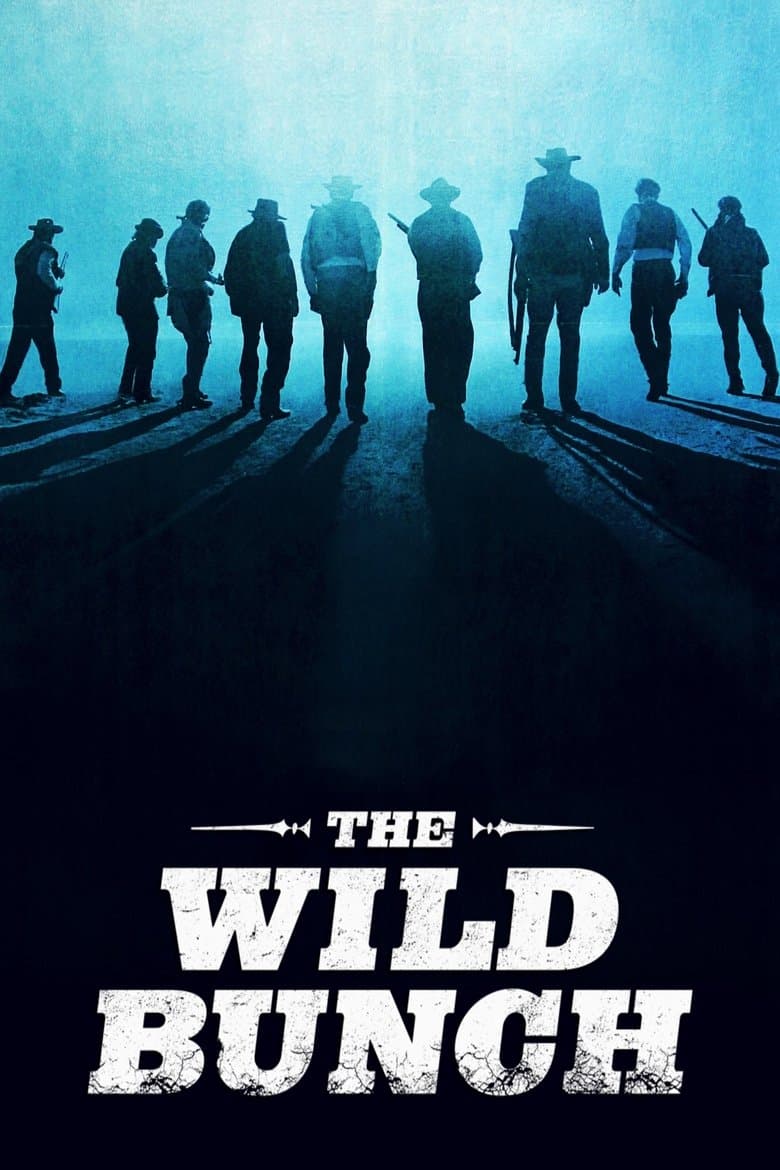
Sam Peckinpah’s violent revisionist Western follows an aging gang of outlaws led by Pike Bishop as they chase one last score in a world that is rapidly leaving them behind. After a botched robbery, the men flee into Mexico, where shifting loyalties and the turmoil of revolution draw them into a final reckoning. Peckinpah’s groundbreaking use of slow motion, fractured editing, and explosive violence gave the Western a new harshness and moral ambiguity. Yet beneath the bloodshed lies a mournful reflection on loyalty, obsolescence, and the passing of an outlaw code. The Wild Bunch remains one of the most influential and transformative Westerns ever made.
Watch for
- Peckinpah’s use of slow motion and rapid cutting, which turns gunfights into both visceral chaos and tragic spectacle.
- The bond among the members of the gang, whose rough loyalty gives the film its emotional core even as their world collapses around them.
- How the film contrasts old outlaw codes with railroads, machine guns, and political upheaval, emphasizing that history is closing in on these men.
- The final march and climactic shootout, where fatalism, honor, and self-destruction converge in one of the most famous endings in Western history.
Production notes
The Wild Bunch was Sam Peckinpah's revisionist western about an aging outlaw gang's final robbery, set in 1913 Texas and Mexico against the backdrop of Pancho Villa's Mexican Revolution. Peckinpah developed the screenplay with Walon Green from a story by Green and Roy N. Sickner. The film was Peckinpah's deliberate response to the conventional western tradition — using the genre's familiar elements while subverting its moral certainties through extended slow-motion violence, morally ambiguous protagonists, and a setting in the genre's twilight years. William Holden played Pike Bishop, leader of the outlaw gang, with Ernest Borgnine as Dutch Engstrom, Robert Ryan as Deke Thornton (Pike's former partner, now hired to capture him), Edmond O'Brien as Sykes, Warren Oates as Lyle Gorch, Ben Johnson as Tector Gorch, Jaime Sánchez as the young Mexican Angel, Emilio Fernández as General Mapache, and Strother Martin and L.Q. Jones as the bounty hunters Coffer and T.C. The film was shot on location in Mexico during a relentlessly punishing production. Cinematographer Lucien Ballard shot the film. The famous opening railway-robbery and closing massacre have become some of the most influential violence sequences in American cinema. Production cost approximately $6.2 million.
Trivia
- The Wild Bunch was shot on location in Mexico — primarily in the state of Coahuila — during a relentlessly punishing production; the heat, dust, and physical demands reportedly affected the cast substantially, with Sam Peckinpah's notoriously difficult on-set behavior adding to the production's chaos.
- Peckinpah's substantial use of slow-motion violence — including the famous opening railway robbery and the closing massacre — was inspired by Akira Kurosawa's Seven Samurai (1954) and Arthur Penn's Bonnie and Clyde (1967); the technique would shape subsequent decades of action-cinema work, with direct lineage to John Woo's Hong Kong action films and Quentin Tarantino's American features.
- William Holden's Pike Bishop has been continuously cited as one of the canonical aging-outlaw performances in American cinema; Holden was 50 when he made the film, and his physical performance integrated the character's literal aging with the western genre's symbolic aging into one of the most thoroughly realized late-career roles in 1960s American cinema.
- The film was widely controversial on its 1969 release for its substantial violence; reviewers split between those who saw it as a meaningful elegy for the dying western genre and those who saw it as gratuitous violence for its own sake — a debate that has continued throughout the film's continuing critical reception.
- The Wild Bunch received two Academy Award nominations — Best Original Screenplay and Best Original Score — and won neither; the film's substantial influence on subsequent cinema has been recognized through extensive critical reassessment and through the 1995 director's-cut restoration that preserved Peckinpah's original creative vision.
Legacy
The Wild Bunch is widely regarded as Sam Peckinpah's masterwork and as the canonical text of the western genre's revisionist late period. It received two Academy Award nominations (Best Original Screenplay and Best Original Score) and won neither; the film's substantial influence on subsequent cinema has been recognized primarily through extensive critical reassessment. It was selected for the National Film Registry in 1999. The film's substantial use of slow-motion violence — including the famous opening railway robbery and the closing massacre — has shaped subsequent decades of action-cinema work, with direct lineage to John Woo's Hong Kong action films and Quentin Tarantino's American features. The film's specific thematic concern with the western genre's death — Pike Bishop and his gang as men out of time, the world moving past them even as they make their final stand — has been continuously studied as one of the most thoroughly realized meditations on genre-cinema decline. Among the revisionist westerns of the late 1960s and early 1970s, The Wild Bunch sits alongside Butch Cassidy and the Sundance Kid (1969) and McCabe & Mrs. Miller (1971) as the canonical late-period treatments of the form.