The Apartment
Vibe
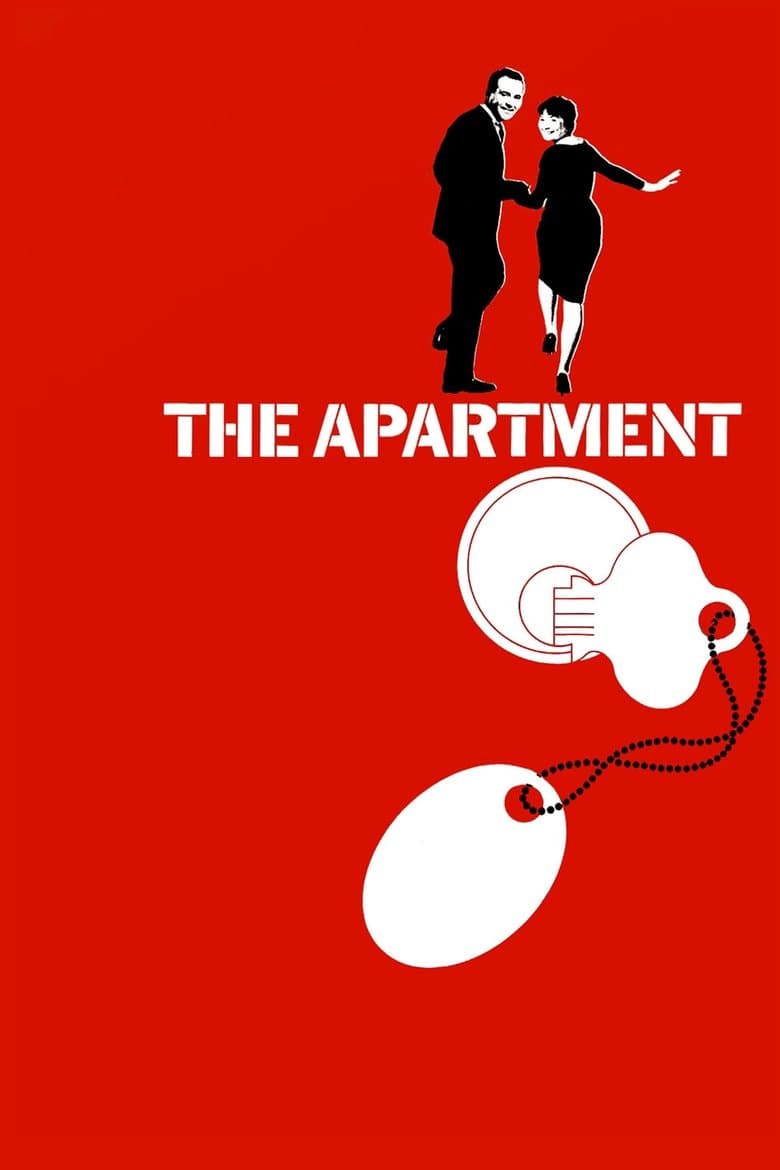
Billy Wilder’s bittersweet comedy-drama follows C.C. Baxter, a lonely insurance clerk who lends his apartment to company executives for their extramarital affairs in the hope that professional favors will help him climb the corporate ladder. What begins as a cynical arrangement becomes emotionally fraught when Baxter falls for elevator operator Fran Kubelik, who is herself entangled with one of the men using his key. Jack Lemmon brings Baxter an irresistible mix of decency, melancholy, and comic awkwardness, while Shirley MacLaine gives Fran warmth, intelligence, and quiet sadness. Blending romance, social satire, and moral awakening, The Apartment remains one of the sharpest and most humane films of Wilder’s career.
Watch for
- Jack Lemmon’s performance, especially the way Baxter’s politeness, hesitation, and comic timing gradually reveal a man waking up to his own self-betrayal.
- How Wilder uses office spaces, elevators, and the apartment itself to turn everyday environments into expressions of hierarchy, loneliness, and emotional compromise.
- Shirley MacLaine’s performance as Fran, whose wit and composure are shadowed by sadness, making the romance feel fragile and earned rather than purely whimsical.
- The tonal balancing act between comedy and heartbreak, particularly in scenes where brisk dialogue and visual humor suddenly give way to emotional vulnerability.
Production notes
The Apartment was Billy Wilder's romantic comedy-drama about a New York insurance-company clerk who advances his career by lending his apartment to philandering company executives for their affairs. Wilder co-wrote the screenplay with I.A.L. Diamond, his collaborator across the subsequent decade of work. The film was United Artists's adult-themed prestige production, treating the morally complex territory of corporate sexual exploitation and the gender asymmetries of power. Jack Lemmon played C.C. 'Bud' Baxter — the role established him as Wilder's preferred leading man across the subsequent decade of work — with Shirley MacLaine as the elevator operator Fran Kubelik, Fred MacMurray as the senior executive Jeff D. Sheldrake (continuing his against-type casting from Wilder's Double Indemnity, 1944), Ray Walston as Mr. Dobisch, Jack Kruschen as the Jewish neighbor Dr. Dreyfuss, and David Lewis as Mr. Kirkeby. Cinematographer Joseph LaShelle shot the film in widescreen black-and-white. Composer Adolph Deutsch contributed the score, including the famous 'Theme from The Apartment.' Production cost approximately $3 million.
Trivia
- The Apartment was the last entirely black-and-white film to win the Best Picture Academy Award until The Artist (2011) — making it the last Best Picture winner in the studio-era black-and-white tradition before the industry's full transition to color; the choice of black-and-white was Billy Wilder's deliberate aesthetic decision against Hollywood's contemporary preferences.
- Fred MacMurray's casting as the senior executive Jeff D. Sheldrake — a morally compromised character with a substantial wife and family who exploits a younger working woman — was Wilder's deliberate return to MacMurray's against-type casting from Double Indemnity (1944); MacMurray would later object to the role in interviews, having again been cast as a moral villain after his successful return to comedic-leading-man roles.
- The film's central premise — an insurance clerk lending his apartment to philandering executives — was inspired by an actual production-side anecdote from Wilder's earlier life, in which an apartment had been lent for adultery; the specific corporate-power-asymmetry framing was Wilder and Diamond's own contribution.
- Shirley MacLaine's performance as the elevator operator Fran Kubelik was widely celebrated; she received an Academy Award nomination for Best Actress but lost to Elizabeth Taylor for Butterfield 8 — an outcome that has been continuously discussed as one of the more controversial Oscar decisions of the early 1960s.
- The Apartment won five Academy Awards including Best Picture, Best Director (Wilder), Best Original Screenplay (Wilder and Diamond), Best Art Direction, and Best Film Editing; the film received ten total nominations including for the lead performers, making it one of the most thoroughly Oscar-celebrated films of 1960.
Legacy
The Apartment won five Academy Awards including Best Picture, Best Director (Billy Wilder), and Best Original Screenplay (Wilder and I.A.L. Diamond) — making it one of the few films in Academy history with Best Picture, Director, and Screenplay wins for the same writer-director. It was selected for the National Film Registry in 1994. The Apartment was the last entirely black-and-white film to win the Best Picture Academy Award until The Artist (2011) — making it the last Best Picture winner in the studio-era black-and-white tradition. The film's depiction of corporate sexual exploitation and the gender asymmetries of power has aged into permanent relevance — Wilder and Diamond's treatment of the territory has remained continuously useful across decades of subsequent American debate about workplace sexual dynamics. The famous 'Theme from The Apartment' became a popular instrumental hit and remains one of the most-recognized pieces of soft-jazz cinema music ever composed. Among Billy Wilder's films, The Apartment sits alongside Some Like It Hot (1959) and Double Indemnity (1944) as the canonical achievements of his career — and is regularly cited as the high-water mark of his Diamond collaboration era.