Taxi Driver
Vibe
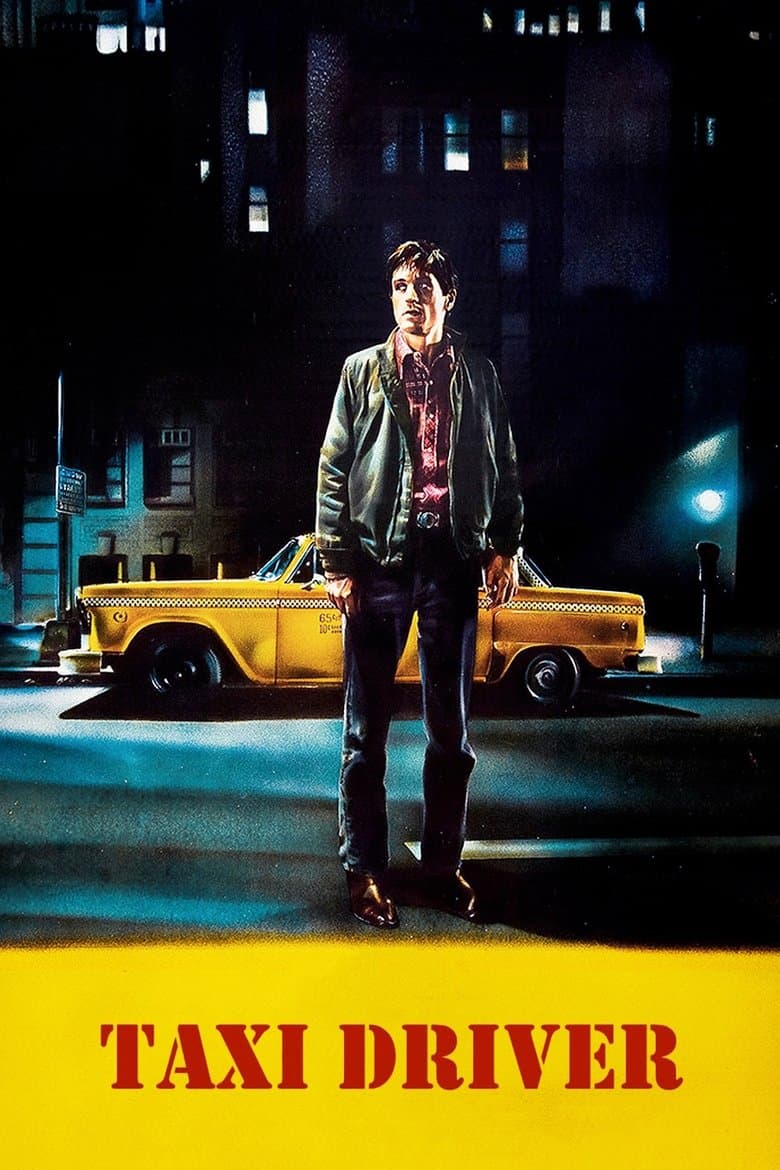
Martin Scorsese’s gritty character study follows Travis Bickle, a lonely Vietnam veteran drifting through the nocturnal streets of a decaying New York City as a taxi driver. Alienated from the people around him and repulsed by the urban corruption he believes surrounds him, Travis grows increasingly consumed by paranoia, resentment, and the fantasy of violent purification. Robert De Niro’s haunting performance captures both the character’s blank detachment and his mounting instability, while Scorsese’s direction immerses the viewer in a city of neon, steam, and psychic dislocation. Disturbing, hypnotic, and deeply influential, Taxi Driver remains one of American cinema’s most powerful portraits of loneliness, obsession, and alienation.
Watch for
- Scorsese’s use of rain-slick streets, drifting camera movement, and Bernard Herrmann’s score to turn New York into both a real city and a feverish mental landscape.
- De Niro’s performance, especially the way Travis’s stiffness, silences, and sudden bursts of intensity reveal a mind gradually coming apart.
- How the film traps the viewer inside Travis’s perspective, making his distorted view of the world both compelling and deeply unsettling.
- The famous mirror scene and the violent final act, where performance, editing, and point of view push the film from alienation into nightmare.
Production notes
Taxi Driver was Martin Scorsese's collaboration with screenwriter Paul Schrader (then making his first major produced credit). Schrader had written the screenplay during a period of personal crisis — he had been homeless and reportedly contemplating suicide before turning to writing — and the resulting work was deeply rooted in his own psychological state. Robert De Niro played Travis Bickle in a performance that won him universal critical acclaim, with Jodie Foster (then 12) playing the underage prostitute Iris. The cast included Cybill Shepherd as Betsy, Albert Brooks as Tom, Harvey Keitel as the pimp Sport, Peter Boyle as Wizard, and an uncredited Martin Scorsese himself as the husband of Travis's intended assassination target. The film's setting in 1976 New York City — captured during the city's actual fiscal crisis and decline — gave the film its characteristic visual atmosphere of urban decay. Cinematographer Michael Chapman shot the film (beginning his collaboration with Scorsese that would extend to Raging Bull). Composer Bernard Herrmann contributed his final film score before his death two months after production wrapped. Production cost approximately $1.9 million.
Trivia
- Bernard Herrmann's iconic saxophone-led score for Taxi Driver was his final film composition before his death from a heart attack in December 1975, two months after the film wrapped; Herrmann had composed scores for Citizen Kane, Vertigo, North by Northwest, Psycho, and dozens of other major films across a four-decade career.
- Jodie Foster was 12 when she played Iris and required New York Department of Labor permits to perform; the production was reportedly subject to substantial protective measures, with Foster's older sister Connie standing in for the more sexually-intense scenes.
- John Hinckley Jr.'s 1981 attempt to assassinate President Ronald Reagan was specifically motivated by his desire to impress Jodie Foster, whom he had been obsessed with after seeing Taxi Driver; the connection between the film and the assassination attempt has become one of the most-discussed examples of fiction's potential real-world influence.
- Robert De Niro famously prepared for the role by working as an actual New York City taxi driver during evenings and nights for several months before production; the experience gave the role its specific authentic-feeling cab-driver register that has shaped subsequent character preparation throughout American cinema.
- The famous 'You talkin' to me?' monologue was reportedly improvised by De Niro on set; the original screenplay had different dialogue, and De Niro's spontaneous mirror-confrontation with himself became one of the most-quoted moments in American cinema.
Legacy
Taxi Driver is one of the most thoroughly analyzed films in American cinema. It received four Academy Award nominations including Best Picture (losing to Rocky), Best Actor (De Niro, losing to Peter Finch for Network), and Best Supporting Actress (Jodie Foster). It was selected for the National Film Registry in 1994. Sight & Sound's 2012 critics' poll placed it among the greatest films ever made. Robert De Niro's Travis Bickle has become one of the most cited disturbed protagonists in American cinema; the character's social isolation, gradual deterioration, and violent eruption have been imitated across decades of subsequent character-study films from Falling Down (1993) to Joker (2019). The 1981 John Hinckley Jr. assassination attempt on Ronald Reagan — explicitly motivated by Hinckley's obsession with Jodie Foster after seeing the film — made the film's potential real-world influence one of the most-discussed cases of fiction-to-reality ripple in American cultural history. Among Scorsese's films, Taxi Driver remains the most thoroughly disturbing and the most thoroughly cited, alongside Raging Bull and Goodfellas.