Stagecoach
Vibe
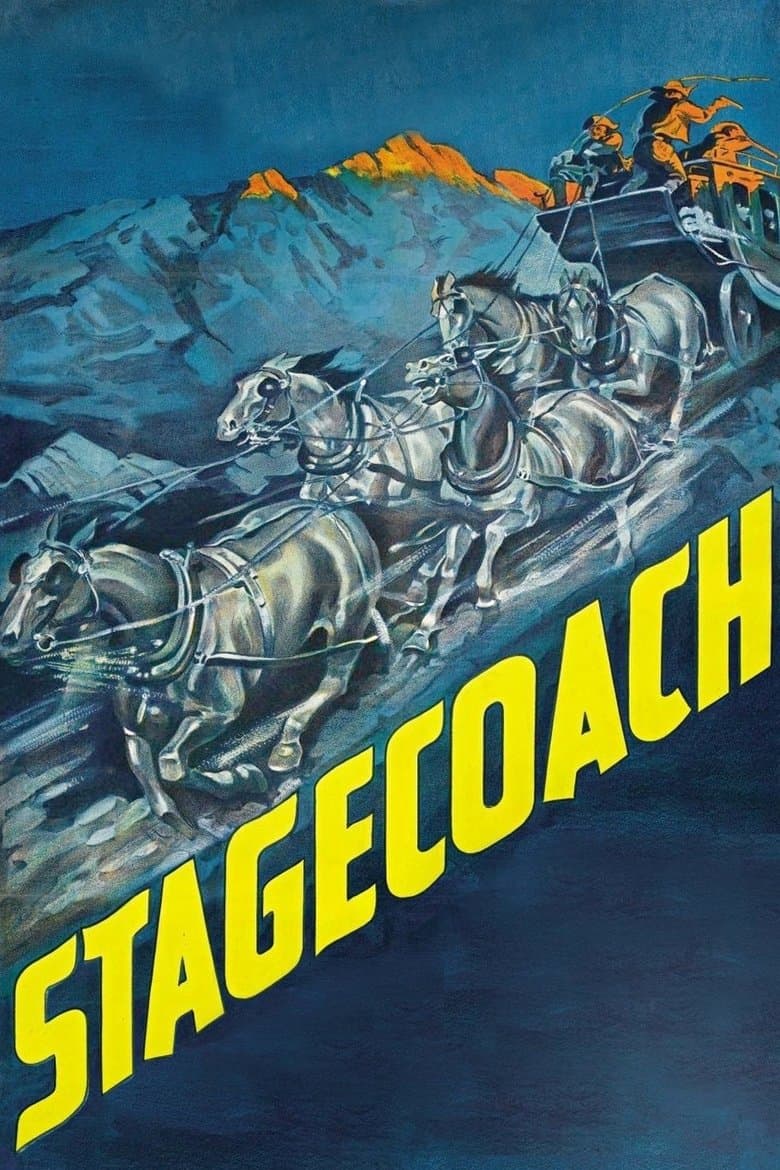
John Ford’s landmark Western follows a disparate group of travelers crossing dangerous territory by stagecoach through Monument Valley and toward the town of Lordsburg. Among them are the escaped outlaw Ringo Kid, a drunken doctor, a prostitute cast out by respectable society, and an officer’s pregnant wife, each carrying private burdens and social judgments into the journey. As danger closes in and class tensions flare, the cramped coach becomes a moving portrait of frontier America. Ford combines thrilling action with sharply observed character drama, while John Wayne’s performance as Ringo announced the arrival of a major screen star. Stagecoach remains one of the films that transformed the Western into a major American art form.
Watch for
- Ford’s use of Monument Valley, which turns the landscape into something mythic while also emphasizing the travelers’ exposure and vulnerability.
- The shifting relationships inside the stagecoach, where class prejudice, suspicion, and unexpected solidarity emerge through small exchanges and glances.
- John Wayne’s entrance as Ringo Kid, one of the most famous star-making introductions in Hollywood history.
- How the film balances suspenseful action with intimate character moments, making the journey itself feel both physically perilous and morally revealing.
Production notes
Stagecoach was John Ford's revival of the western genre — which had been dormant as a serious feature-film form since the early 1930s — adapting Ernest Haycox's 1937 short story 'The Stage to Lordsburg' with the screenplay by Dudley Nichols. Ford's casting of John Wayne as the Ringo Kid was the decision that established Wayne as a major Hollywood star — Wayne had been working in B-westerns for over a decade after his unsuccessful 1930 lead role in Raoul Walsh's The Big Trail, and Stagecoach was his elevation back to major-feature status. Claire Trevor played Dallas, with John Carradine as the gambler Hatfield, Andy Devine as the stagecoach driver Buck, Thomas Mitchell as the alcoholic Doc Boone (a performance that won him the Academy Award for Best Supporting Actor), Donald Meek as the whiskey drummer Peacock, Berton Churchill as the banker Gatewood, Louise Platt as the pregnant Lucy Mallory, and George Bancroft as Marshal Curly Wilcox. Cinematographer Bert Glennon shot the film. The famous Monument Valley locations would become Ford's signature visual setting across nearly two decades of subsequent westerns. Production cost approximately $531,000.
Trivia
- John Ford's casting of John Wayne as the Ringo Kid was the decision that established Wayne as a major Hollywood star; Wayne had been working in B-westerns for over a decade after his unsuccessful 1930 lead role in The Big Trail, and Stagecoach was his elevation back to major-feature status.
- Stagecoach was shot extensively in Arizona's Monument Valley — the first major Ford production to use the location that would become his signature visual setting across nearly two decades of subsequent westerns (My Darling Clementine, Fort Apache, She Wore a Yellow Ribbon, The Searchers, and Cheyenne Autumn all returned to Monument Valley).
- Thomas Mitchell won the Academy Award for Best Supporting Actor for his performance as the alcoholic Doc Boone — a memorable supporting performance in a film year that included Gone with the Wind, Mr. Smith Goes to Washington, and Wuthering Heights; the win was Mitchell's only Oscar in his long character-actor career.
- The famous Apache attack and chase sequence — one of the most influential action sequences in any western — required complex stunt coordination by Yakima Canutt, whose work on the film established him as the most distinguished western stunt coordinator of his era; Canutt would later supervise stunts on Ben-Hur (1959) and dozens of other major productions.
- Stagecoach was a substantial commercial success on its 1939 release, grossing approximately $1 million on its $531,000 budget; the film's commercial vindication of the serious-western form helped trigger the subsequent decade-and-a-half of major-studio western production that would peak in the 1950s.
Legacy
Stagecoach is widely credited as the film that revived the western genre as a serious feature-film form and as the launching point for John Ford's two-decade collaboration with John Wayne and the Monument Valley location. It won two Academy Awards — Best Supporting Actor (Thomas Mitchell) and Best Original Score (Richard Hageman, W. Franke Harling, John Leipold, Leo Shuken). It was selected for the inaugural class of the National Film Registry in 1995. The film's commercial success demonstrated that serious western feature production could compete with prestige drama at the major-studio level, opening the way to the subsequent fifteen-year boom of A-list westerns. Orson Welles reportedly watched Stagecoach approximately forty times before making Citizen Kane (1941), specifically to study its construction; Welles claimed the film as his template for shot composition and editing rhythm. John Wayne's launching as a major star — and Ford's establishment of Wayne as the canonical Hollywood western leading man — shaped the entire subsequent fifteen-year peak period of the genre. Among American westerns, Stagecoach remains the foundational text.