Schindler's List
Vibe
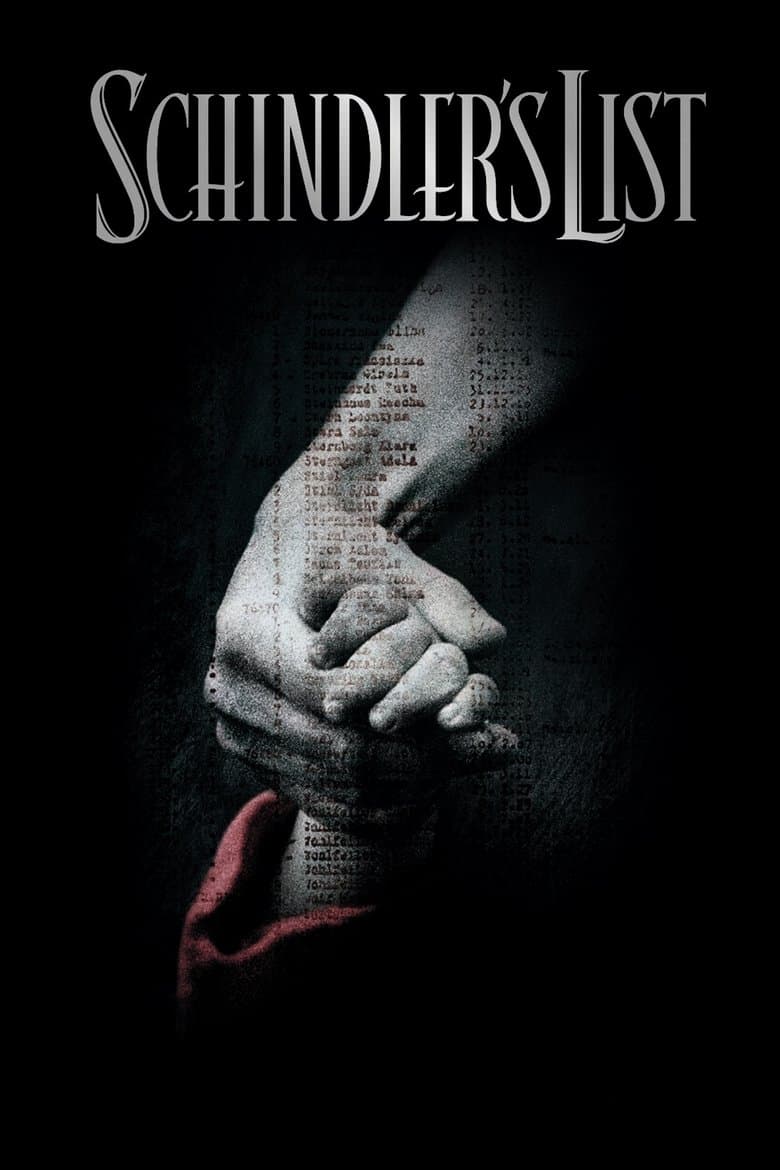
Steven Spielberg’s Schindler’s List tells the true story of Oskar Schindler, a German industrialist who saved more than a thousand Jewish lives during the Holocaust by employing them in his factories. At first motivated by profit and opportunity within the Nazi war economy, Schindler gradually witnesses the horrifying realities of persecution and genocide. As his conscience awakens, he begins using his wealth, influence, and connections to shield his Jewish workers from deportation and death. Filmed primarily in stark black and white, Spielberg combines documentary-like realism with deeply personal storytelling. Anchored by powerful performances from Liam Neeson as Schindler and Ralph Fiennes as the brutal commandant Amon Göth, the film stands as one of the most profound cinematic memorials to the Holocaust.
Watch for
- The stark black-and-white cinematography, which evokes historical newsreels and reinforces the film’s documentary-like realism.
- Ralph Fiennes’s chilling performance as Amon Göth, representing the terrifying arbitrariness of Nazi violence.
- The use of selective color—most famously the girl in the red coat—which highlights moments of innocence within overwhelming tragedy.
- Schindler’s gradual transformation from opportunistic businessman to reluctant hero, revealed through subtle shifts in behavior and perspective.
Production notes
Schindler's List was Steven Spielberg's adaptation of Thomas Keneally's 1982 novel Schindler's Ark, based on the true story of Oskar Schindler — the German industrialist who saved approximately 1,200 Jewish workers during the Holocaust by employing them in his factories. Spielberg had purchased the rights in 1982 but delayed production for over a decade, feeling unprepared to make the film; he ultimately shot Jurassic Park immediately before. Steven Zaillian wrote the screenplay. Liam Neeson played Schindler, Ben Kingsley played Itzhak Stern, and Ralph Fiennes played the SS officer Amon Göth. Cinematographer Janusz Kamiński shot the film primarily in black-and-white on location in Poland, including at Auschwitz-Birkenau (filmed from outside the camp's gates at the requirement of Polish authorities). Composer John Williams contributed the score, with violinist Itzhak Perlman performing the main theme. Spielberg directed the film without taking a salary, donating his earnings to Holocaust education. Production cost approximately $22 million.
Trivia
- Steven Spielberg directed Schindler's List without taking a salary, considering it 'blood money' from a project about the Holocaust; he donated his Schindler's earnings to found the USC Shoah Foundation, which has since recorded over 50,000 video testimonies of Holocaust survivors.
- Spielberg shot Jurassic Park and Schindler's List back-to-back in 1993; he used to discuss Schindler's List rough cuts via satellite from Poland with the Jurassic Park editing team in California, an extraordinarily punishing creative period.
- The famous 'red coat' sequence — in which a young girl in a red coat walks through the otherwise black-and-white Krakow ghetto liquidation — used the film's only color element and was based on a real survivor's testimony of seeing a child during the actual liquidation.
- Ralph Fiennes was nearly cut from the role of Amon Göth after Spielberg felt his initial screen tests were 'too sympathetic'; the production reshaped the character's evil more thoroughly across reshoots, and Fiennes received an Academy Award nomination for the performance.
- Schindler's List won seven Academy Awards including Best Picture, Best Director, Best Adapted Screenplay, and Best Cinematography; Spielberg's Best Director win was widely treated as overdue recognition for one of the major American filmmakers of the era.
Legacy
Schindler's List won seven Academy Awards including Best Picture and Best Director — the moment Steven Spielberg shifted from popular-blockbuster director to widely-respected dramatic filmmaker. It was selected for the National Film Registry in 2004. The film's commercial reception was extraordinary for a three-hour black-and-white Holocaust drama: it grossed over $322 million worldwide on a $22 million budget. Beyond box office, the film has had unparalleled cultural and educational reach; it is regularly screened in American high schools and middle schools as a Holocaust-education tool, and the USC Shoah Foundation that Spielberg founded with his profits has recorded over 50,000 survivor testimonies across decades. The film's depiction of moral ambiguity (Schindler as profiteer-turned-savior) and its rejection of redemptive simplification have made it the canonical American Holocaust film. Among Spielberg's films, Schindler's List is the most frequently cited as his masterwork — the synthesis of his moral seriousness, his historical sensibility, and his command of cinematic craft across an unforgettable subject.