Raiders of the Lost Ark
Vibe
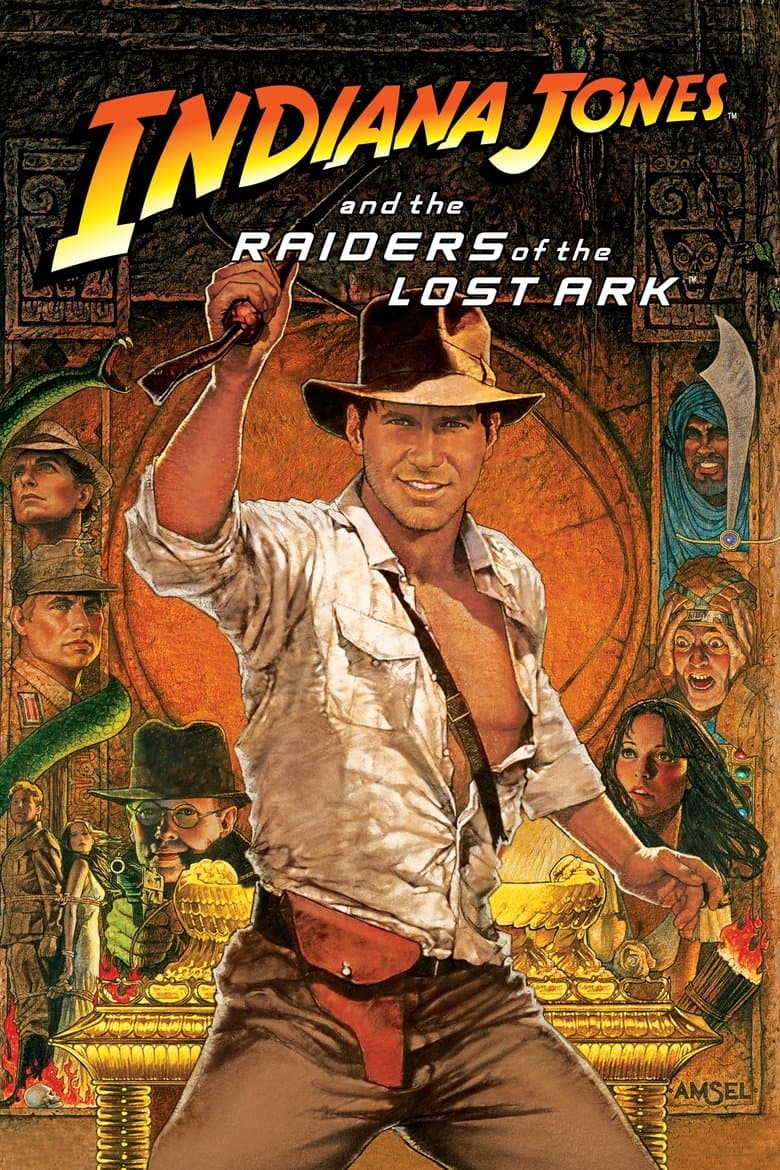
Steven Spielberg’s adventure classic introduces archaeologist Indiana Jones, a globe-trotting treasure hunter racing against Nazi forces to locate the legendary Ark of the Covenant. Set in the 1930s, the film propels Indy through booby-trapped ruins, bustling marketplaces, and desert excavations in a quest that blends pulp excitement with mythic stakes. Harrison Ford’s performance gives the character a perfect mix of swagger, wit, and vulnerability, making him one of cinema’s most enduring heroes. Drawing on the spirit of old serial adventures while sharpening them with modern pacing and craftsmanship, Raiders of the Lost Ark delivers one exhilarating set piece after another. It remains one of the great achievements of popular adventure filmmaking.
Watch for
- Spielberg’s clarity of action staging, especially the way each chase, fight, and trap sequence is easy to follow while constantly escalating tension.
- Harrison Ford’s performance, which makes Indy feel heroic but never invulnerable, balancing confidence with exhaustion, fear, and improvisation.
- The film’s use of visual iconography—maps, relics, shadows, snakes, and ancient spaces—to turn pulp adventure into something mythic and cinematic.
- John Williams’s score, which gives the film its sense of grandeur and transforms Indy’s entrances and escapes into pure movie-star legend.
Production notes
Raiders of the Lost Ark was Steven Spielberg's collaboration with George Lucas, who had developed the original story for several years before bringing it to Spielberg. Lawrence Kasdan wrote the screenplay from Lucas's story (Philip Kaufman is credited for story development as well). The film was Paramount's reach for a high-adventure franchise after Lucasfilm's Star Wars (1977) and Empire Strikes Back (1980) had established the brand. Harrison Ford played Indiana Jones — a role Tom Selleck had been cast for but had to abandon due to his Magnum, P.I. television commitment, with Ford taking the role only after Spielberg lobbied Lucas to use him over the producer's preference. Karen Allen played Marion Ravenwood, with Paul Freeman as René Belloq, John Rhys-Davies as Sallah, Ronald Lacey as the Nazi officer Toht, Denholm Elliott as Marcus Brody, and Wolf Kahler as Colonel Dietrich. Cinematographer Douglas Slocombe shot the film. Composer John Williams contributed the iconic 'Raiders March' theme. Production cost approximately $20 million.
Trivia
- Tom Selleck had been cast as Indiana Jones but had to abandon the role due to his Magnum, P.I. television commitment; Harrison Ford took the role only after Steven Spielberg lobbied George Lucas to use him over Lucas's initial preference for an unknown actor, and the casting launched Ford's three-decade career as one of Hollywood's most dependable leading men.
- Karen Allen's role as Marion Ravenwood was inspired by Howard Hawks's strong-female-character tradition — particularly the Hawks-style 'wisecracking woman who matches the hero' template; Allen would reprise the role nearly thirty years later in Indiana Jones and the Kingdom of the Crystal Skull (2008), one of the longer gaps between original appearance and reprise in Hollywood history.
- The famous sword-fight-vs-gunshot sequence in the Cairo market — Indy facing a swordsman, then drawing his pistol and shooting him — was improvised after Harrison Ford fell ill with dysentery during production and couldn't perform the choreographed sword fight; the abbreviated comic alternative was Spielberg's solution, and it became one of the most-quoted moments in the film.
- The famous 'Raiders' face-melting sequence — when the Ark's spirits attack Belloq, Toht, and Dietrich — was achieved by Industrial Light & Magic with practical effects using gelatin-and-wax sculptures that were heat-melted on camera, photographed at varied rates; the sequence was reportedly so disturbing that the production team applied for a PG rating only after multiple appeals.
- Raiders of the Lost Ark grossed approximately $389 million worldwide on its $20 million budget — the highest-grossing film of 1981 — and launched the Indiana Jones franchise that would extend to four sequel films across more than forty years (with The Dial of Destiny released in 2023).
Legacy
Raiders of the Lost Ark received eight Academy Award nominations and won four (Best Art Direction, Best Visual Effects, Best Sound, Best Film Editing); it lost Best Picture and Best Director to Chariots of Fire and Reds respectively. It was selected for the National Film Registry in 1999. The film launched the Indiana Jones franchise that would extend to four sequel films (Temple of Doom, Last Crusade, Crystal Skull, and Dial of Destiny) across more than forty years. Harrison Ford's Indiana Jones — the academic adventurer with whip, fedora, and dry wit — became one of the most enduringly recognizable characters in American popular culture, alongside Ford's Han Solo as one of his two career-defining roles. John Williams's 'Raiders March' theme has become one of the most recognizable pieces of film music ever composed. The film's specific tone — high-adventure pulp seriousness rather than wink-camp parody — established the template for subsequent decades of franchise action filmmaking, with direct lineage to The Mummy (1999), National Treasure (2004), and most franchise adventure cinema.