Psycho
Vibe
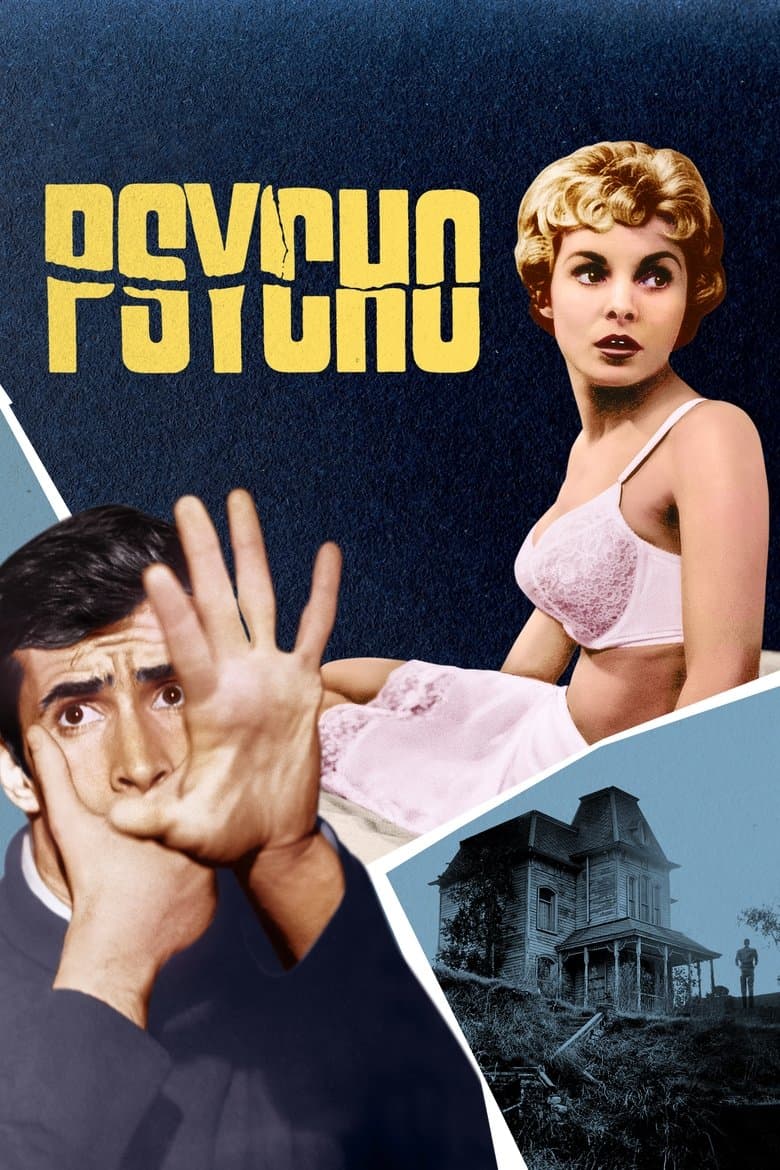
Alfred Hitchcock’s groundbreaking thriller begins with Marion Crane, a secretary who impulsively steals a large sum of money and flees town, hoping to start a new life. Her journey leads her to the isolated Bates Motel, where she encounters the awkward but polite proprietor, Norman Bates, who lives under the shadow of his domineering mother. What follows is a shocking turn of events that upends audience expectations and plunges the story into psychological terror. Hitchcock’s precise direction, stark black-and-white cinematography, and Bernard Herrmann’s piercing string score create an atmosphere of relentless tension. With its infamous shower scene and daring narrative twists, Psycho redefined the possibilities of suspense and horror filmmaking.
Watch for
- The legendary shower scene, whose rapid editing, sound design, and music create one of the most famous moments in cinema history.
- Anthony Perkins’s unsettling performance as Norman Bates, balancing awkward charm with growing menace.
- Bernard Herrmann’s all-string score, which intensifies the film’s tension and emotional unease.
- Hitchcock’s careful visual framing and misdirection, which constantly guide—and deceive—the audience’s expectations.
Production notes
Psycho was Alfred Hitchcock's deliberate departure from the prestigious A-list productions he had been making since 1958 (Vertigo, North by Northwest); he financed the film himself through Paramount with substantial creative control after the studio expressed reluctance about the dark subject matter and modest budget. Joseph Stefano adapted Robert Bloch's 1959 novel, which had been loosely inspired by the real-life Wisconsin murderer Ed Gein. Hitchcock used the production crew from his Alfred Hitchcock Presents television series rather than his usual feature crew, partly to keep costs low and partly to maintain a smaller, more controlled set environment. Anthony Perkins played Norman Bates, with Janet Leigh as Marion Crane, Vera Miles as Lila Crane, and John Gavin as Sam Loomis. The famous shower sequence required approximately seven days of shooting and roughly 78 setups for what becomes approximately 45 seconds of screen time. Cinematographer John L. Russell shot the film in black-and-white, partly for atmosphere and partly to make the blood less alarming for censors. Composer Bernard Herrmann contributed the iconic shrieking-strings score. Production cost approximately $806,000.
Trivia
- Janet Leigh's character Marion Crane is killed approximately 47 minutes into the film — an unprecedented narrative shock at the time, since Leigh was the credited star and the film up to that point had been built around her perspective.
- The famous shower sequence used over 70 individual camera setups across approximately seven days of shooting to produce roughly 45 seconds of screen time; Hitchcock and editor George Tomasini cut the sequence to a precise rhythmic structure that has been studied as the canonical example of montage suspense.
- Hitchcock famously refused to allow late entrance to theaters showing Psycho — anyone arriving after the film began had to wait for the next showing — a marketing innovation that built audience anticipation and protected the film's mid-narrative twist.
- The blood in the shower sequence was actually Bosco Chocolate Syrup; the dark color worked better for black-and-white cinematography than real-blood substitutes would have, and the sequence's iconic visual quality is partly the result of this happy accident.
- Bernard Herrmann's shrieking-strings score for the shower sequence was originally not in Hitchcock's plan — Hitchcock had wanted the sequence silent — and Herrmann's insistence on adding the score against Hitchcock's preference produced one of the most influential film-music moments of the 20th century.
Legacy
Psycho transformed the horror genre and established the template for modern psychological thrillers. It received four Academy Award nominations (winning none), and was selected for the National Film Registry in 1992. Anthony Perkins's performance as Norman Bates has become one of the canonical portrayals of psychological deterioration in American cinema, and the character's mother-fixation and split-personality structure has been imitated, parodied, and reimagined across decades. Bernard Herrmann's shrieking-strings shower-sequence score is one of the most reproduced pieces of film music in any genre. The film's sustained influence on subsequent American horror cinema is immense — Brian De Palma's Carrie (1976) and Dressed to Kill (1980), John Carpenter's Halloween (1978), and the entire slasher tradition from Friday the 13th forward all owe direct debts to Psycho's structure, visual techniques, and tone. The 1998 Gus Van Sant shot-for-shot remake — a deliberate art-cinema experiment — confirmed the film's iconic status by demonstrating how thoroughly specific Hitchcock's original direction had been. Among horror films, Psycho remains the most thoroughly studied and the most thoroughly imitated.