The Jazz Singer
Vibe
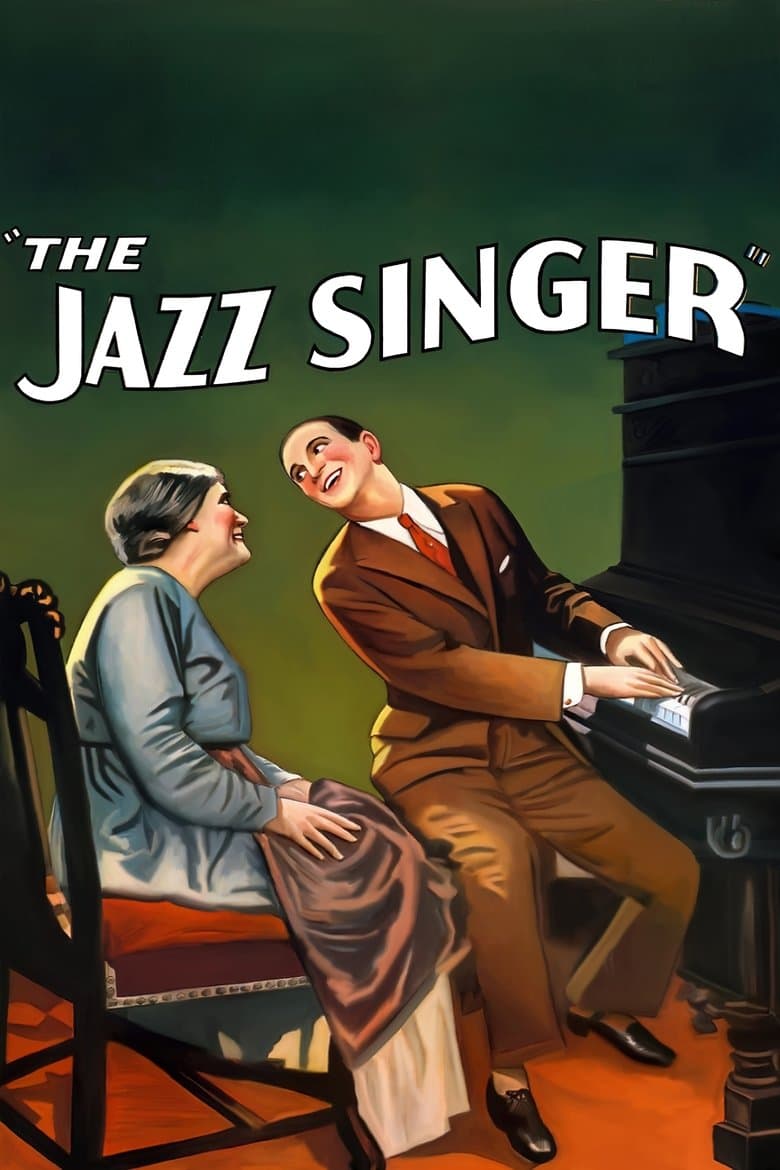
This historic drama follows Jakie Rabinowitz, the son of a Jewish cantor who longs to leave the synagogue tradition behind and build a career singing popular music on the American stage. As he reinvents himself as performer Jack Robin, the film frames his rise as both a story of ambition and a painful conflict between family loyalty, religious heritage, and assimilation. Though largely silent in form, The Jazz Singer became a landmark for its synchronized songs and spoken dialogue, signaling a technological shift that would transform the industry almost overnight. Its legacy remains inseparable from both the arrival of sound cinema and the cultural tensions embedded within its story and performance style.
Watch for
- The moments when sound enters the film, especially the contrast between silent-era storytelling and the sudden intimacy and novelty of spoken and sung performance.
- How the conflict between Jakie’s stage ambitions and his father’s expectations drives the film emotionally, turning technological breakthrough into family melodrama.
- Al Jolson’s performance style, which reflects the theatrical traditions bridging vaudeville, stage performance, and early sound cinema.
- The way the film stands at a crossroads in movie history, with silent-film visual grammar still intact even as sound begins to reshape what screen acting and storytelling can be.
Production notes
The Jazz Singer was Alan Crosland's adaptation of Samson Raphaelson's 1925 stage play, produced by Warner Bros. as the studio's substantial bet on the Vitaphone synchronized-sound technology. The film is widely credited as the first feature-length film with synchronized sound dialogue, though most of the film remained silent with synchronized music and brief dialogue sequences. Al Jolson played Jakie Rabinowitz/Jack Robin — the son of a Jewish cantor who abandons his religious upbringing for a career as a popular jazz singer. The cast included May McAvoy as Mary Dale, Warner Oland as the Cantor (Jakie's father), Eugenie Besserer as Sara Rabinowitz (Jakie's mother), and Otto Lederer as Moisha Yudelson. The film's famous moment when Jolson speaks his then-iconic line 'Wait a minute, wait a minute, you ain't heard nothin' yet!' was essentially the first major synchronized-dialogue moment in feature cinema. The film's extensive use of blackface — Jolson performs in blackface for substantial portions of the film — has become substantially controversial in subsequent reception. Cinematographer Hal Mohr shot the film. Production cost approximately $422,000.
Trivia
- The Jazz Singer is widely credited as the first feature-length film with synchronized sound dialogue, though most of the film remained silent with synchronized music and brief dialogue sequences; the famous moment when Al Jolson speaks 'Wait a minute, wait a minute, you ain't heard nothin' yet!' was essentially the first major synchronized-dialogue moment in feature cinema.
- The film's commercial success was substantial — grossing approximately $7.5 million on its $422,000 budget — and its substantial revenues helped save Warner Bros. from imminent bankruptcy; the studio's commitment to the Vitaphone technology had been an enormous financial risk, and The Jazz Singer's success validated that risk and triggered the industry's subsequent rapid transition to synchronized sound.
- The film's extensive use of blackface — Al Jolson performs in blackface for substantial portions of the film, including the climactic 'Mammy' performance — has become substantially controversial in subsequent reception; the blackface tradition is now widely recognized as racially harmful, and the film's contemporary reception is substantially shaped by ongoing debate about how to engage with its specific racial content.
- Al Jolson was 41 when he made The Jazz Singer and was already one of the highest-paid entertainers in America; his Broadway career and Vitaphone short-film work had made him substantially wealthier than most Hollywood performers, and The Jazz Singer's success elevated his cultural footprint to even greater levels.
- The Jazz Singer triggered the rapid industry-wide transition to synchronized sound that would substantially reshape Hollywood across the next several years; by 1929, almost all major Hollywood productions had transitioned to synchronized sound, and the silent film tradition had effectively ended within approximately three years of The Jazz Singer's release.
Legacy
The Jazz Singer is widely credited as the first feature-length film with synchronized sound dialogue and as the technological turning point that effectively ended the silent-film era; the film's commercial success triggered the rapid industry-wide transition to synchronized sound that would substantially reshape Hollywood across the next several years. It received the Special Academy Award (a unique award given at the first Academy Awards ceremony in 1929) and was selected for the inaugural class of the National Film Registry in 1996. The film's commercial success helped save Warner Bros. from imminent bankruptcy and validated the studio's substantial Vitaphone technology investment. The film's extensive use of blackface has become substantially controversial in subsequent reception, with ongoing debate about how to engage with its specific racial content — the film's continuing presence in film-history curricula has required substantial pedagogical reconsideration. Among films of the silent-to-sound transition period, The Jazz Singer remains the canonical text of the technological turning point, even as its racial content has substantially complicated its cultural status.