Goodfellas
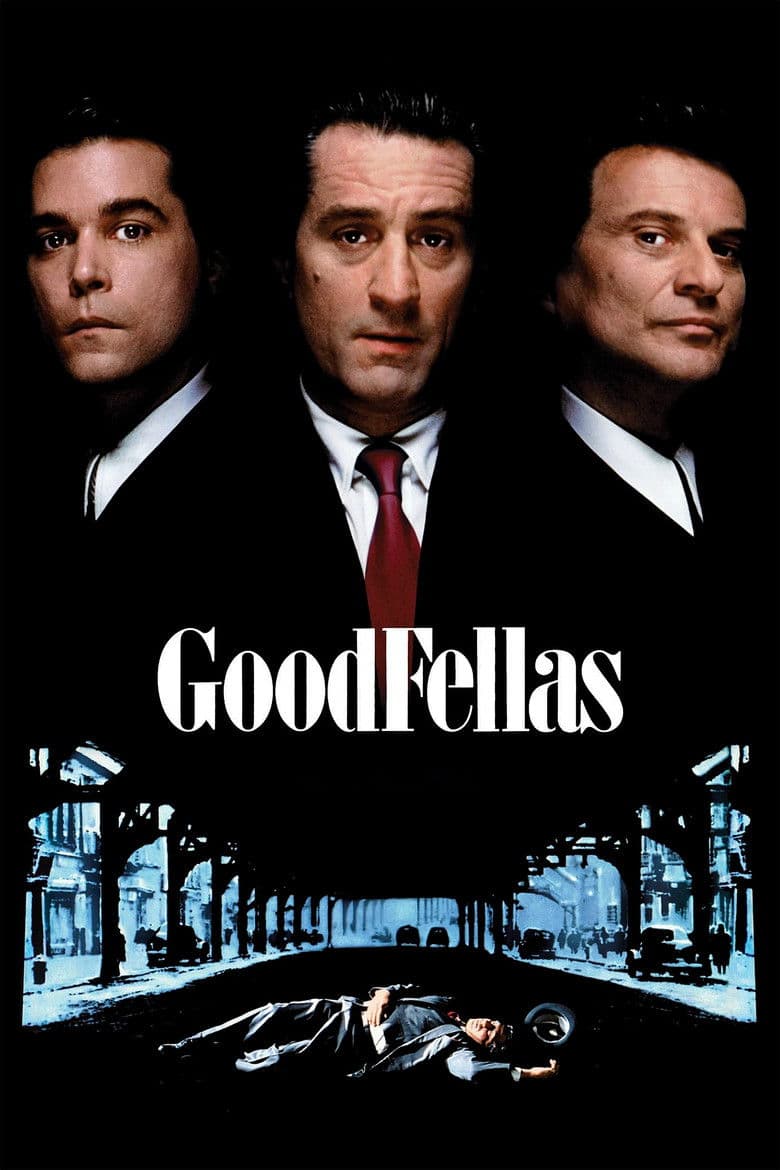
Vibe
Martin Scorsese’s exhilarating crime drama follows Henry Hill’s ascent through the world of organized crime, from wide-eyed neighborhood kid to full participant in the rituals, rewards, and violence of mob life. Guided by Henry’s narration, the film immerses viewers in the allure of belonging, money, status, and danger, while gradually exposing the paranoia, betrayal, and instability beneath the surface. Ray Liotta, Robert De Niro, and Joe Pesci form a volatile trio whose shifting loyalties drive the film’s momentum. With its fluid camera work, propulsive editing, and masterful use of popular music, Goodfellas became one of the defining gangster films of modern American cinema.
Watch for
- Scorsese’s restless formal style, especially the way tracking shots, freeze-frames, and voiceover pull the viewer into Henry’s excitement before revealing the cost of that immersion.
- Joe Pesci’s performance as Tommy DeVito, whose explosive unpredictability turns charm into menace from one moment to the next.
- How the soundtrack functions as emotional propulsion, using popular songs not just to set period but to shape rhythm, mood, and point of view.
- The gradual tonal shift from glamour and camaraderie to cocaine-fueled panic and distrust, which transforms the film from fantasy of access into a study of disintegration.
Production notes
Goodfellas was Martin Scorsese's adaptation of Nicholas Pileggi's 1985 nonfiction book Wiseguy: Life in a Mafia Family, with the screenplay by Pileggi and Scorsese. The film is based on the actual life of Henry Hill, the half-Irish, half-Italian-American associate of the New York Lucchese crime family who became a federal informant. Ray Liotta played Henry Hill, with Robert De Niro as Jimmy Conway (based on the real-life Jimmy Burke), Joe Pesci as Tommy DeVito (based on the real-life Tommy DeSimone), Lorraine Bracco as Karen Hill (Henry's wife), and Paul Sorvino as the underboss Paul Cicero. The film's substantial use of voiceover narration — substantially from Henry Hill's perspective, with Karen Hill's voice providing occasional alternative commentary — became one of the most influential narrative-structural approaches in subsequent crime cinema. Cinematographer Michael Ballhaus shot the film, with the famous Copacabana long-take sequence (a continuous 3-minute Steadicam tracking shot following Henry and Karen from the street through the kitchen and into the Copacabana showroom) becoming one of the most-cited technical achievements in modern cinema. Production cost approximately $25 million.
Trivia
- The film is based on the actual life of Henry Hill, the half-Irish, half-Italian-American associate of the New York Lucchese crime family who became a federal informant; Hill cooperated extensively with author Nicholas Pileggi and was a substantial consultant during the film's pre-production, before his death in 2012.
- The famous Copacabana long-take sequence — a continuous 3-minute Steadicam tracking shot following Henry and Karen from the street through the kitchen and into the Copacabana showroom — became one of the most-cited technical achievements in modern cinema; cinematographer Michael Ballhaus and Steadicam operator Larry McConkey received substantial industry recognition for the work.
- Joe Pesci's performance as the volatile Tommy DeVito (based on the real-life Tommy DeSimone) won him the Academy Award for Best Supporting Actor — defeating Andy García, Bruce Davison, and Graham Greene; the famous 'funny how?' restaurant sequence was reportedly substantially improvised by Pesci and Liotta during a single take.
- Goodfellas was widely considered the stronger 1990 Best Picture contender against Dances with Wolves, which ultimately won; the perceived snub of Goodfellas in favor of Kevin Costner's western has been continuously discussed as one of the more controversial Best Picture decisions of the 1990s.
- Goodfellas received six Academy Award nominations including Best Picture, Best Director (Scorsese), Best Supporting Actor (Pesci, winning), Best Supporting Actress (Lorraine Bracco), Best Adapted Screenplay, and Best Film Editing; the loss in most categories to Dances with Wolves has become a continuing point of cinephile discussion.
Legacy
Goodfellas received six Academy Award nominations and won one — Best Supporting Actor for Joe Pesci. It was selected for the National Film Registry in 2000. The film's Best Picture loss to Dances with Wolves has been continuously discussed as one of the more controversial Oscar decisions of the 1990s, with Goodfellas widely considered the stronger 1990 contender. The famous Copacabana long-take sequence became one of the most-cited technical achievements in modern cinema. Goodfellas's substantial use of voiceover narration established one of the most influential narrative-structural approaches in subsequent crime cinema, with direct lineage to Casino (1995), The Sopranos (1999-2007), and the entire subsequent two decades of prestige crime drama. Among Martin Scorsese's films, Goodfellas sits alongside Taxi Driver (1976) and Raging Bull (1980) as the canonical achievements of his career, and is regularly cited as the film that established the 'Scorsese gangster film' as a distinct genre. The film's specific approach — the morally complex protagonist, the period-soundtrack approach, the substantial voiceover narration — has been continuously imitated across decades of subsequent crime cinema, sometimes successfully (The Sopranos) and sometimes derivatively.