From Here to Eternity
Vibe
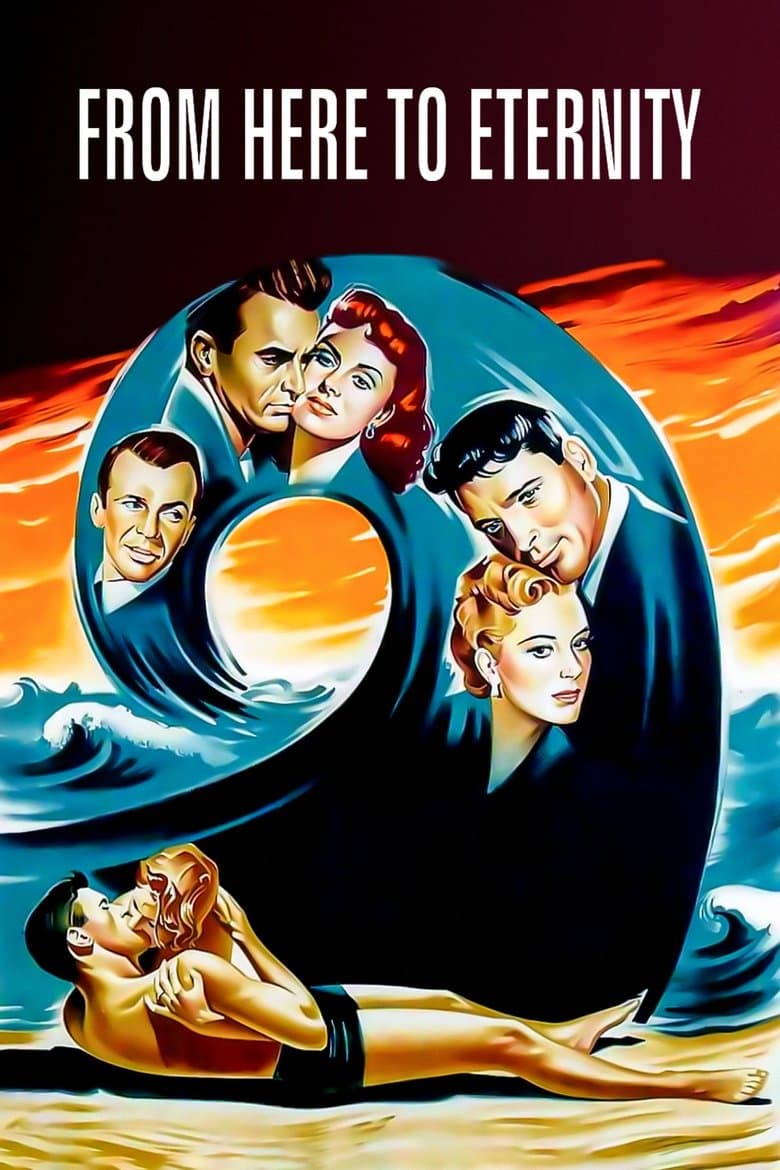
Set in Hawaii in the tense months before the attack on Pearl Harbor, this drama follows a group of soldiers whose personal loyalties, frustrations, and desires unfold under the rigid discipline of army life. At its center is Private Robert E. Lee Prewitt, a stubborn and principled bugler who refuses to box for his company and becomes the target of relentless pressure from his superiors. Around him, forbidden romances, resentments, and acts of defiance expose the emotional costs of military conformity. Directed by Fred Zinnemann, the film balances intimate character drama with the gathering shadow of war. From Here to Eternity remains one of Hollywood’s most memorable portraits of love, conflict, and honor on the eve of catastrophe.
Watch for
- Montgomery Clift’s performance as Prewitt, whose quiet resolve and wounded pride give the film much of its moral force.
- How Zinnemann contrasts the routines of barracks life with the emotional volatility of the characters’ private relationships.
- The famous beach scene with Burt Lancaster and Deborah Kerr, which became an iconic image of screen passion while reflecting the film’s tension between desire and restraint.
- The way the approaching attack on Pearl Harbor hangs over the story, turning personal conflicts into part of a larger sense of impending loss.
Production notes
From Here to Eternity was Fred Zinnemann's adaptation of James Jones's 1951 National Book Award-winning novel about American soldiers at the Schofield Barracks in Hawaii in the months leading up to the December 1941 Japanese attack on Pearl Harbor. Daniel Taradash wrote the screenplay, navigating substantial Production Code Administration demands around the novel's adult content — the novel's frank depictions of military prostitution, homosexuality, and military hierarchy abuse were extensively softened for the film. Burt Lancaster played First Sergeant Milton Warden, with Montgomery Clift as Private Robert E. Lee Prewitt, Deborah Kerr as Karen Holmes, Frank Sinatra as Private Angelo Maggio (a casting choice that revived Sinatra's career after his Decca contract dropped him), Donna Reed as the social-club hostess Lorene, and Ernest Borgnine as the brutal Sergeant 'Fatso' Judson. Cinematographer Burnett Guffey shot the film. Composer George Duning scored it. The famous Lancaster-Kerr beach embrace was filmed on location in Hawaii. Production cost approximately $1.65 million.
Trivia
- Frank Sinatra's casting as Private Maggio reportedly came at a moment when Sinatra's recording contract had been dropped and his career was in serious decline; Sinatra reportedly accepted the role for only $8,000 (against his previous $150,000 fee structures), and his Academy Award win for the performance launched the second phase of his career as a serious dramatic actor.
- The famous Lancaster-Kerr beach embrace, with waves crashing over the two locked lovers — one of the most-quoted images in American cinema — was shot at Hālona Cove on the island of O'ahu in Hawaii; the sequence has been continuously referenced and parodied across decades of subsequent romantic cinema.
- James Jones's source novel was National Book Award winner in 1952 and was widely considered one of the most explicit treatments of military life ever published in mainstream American fiction; the film adaptation substantially softened the novel's frank depictions of military prostitution, homosexuality, and hierarchy abuse to comply with Production Code Administration demands.
- Montgomery Clift's performance as the boxer-soldier Prewitt was widely considered one of the finest screen performances of the 1950s; Clift had researched the role by training with actual U.S. Army boxing instructors and reportedly learned the bugle to the standard required for the famous 'Taps' sequence.
- From Here to Eternity received thirteen Academy Award nominations and won eight including Best Picture, Best Director (Zinnemann), Best Supporting Actor (Sinatra), Best Supporting Actress (Donna Reed), and Best Adapted Screenplay — a near-sweep that has remained one of the most thoroughly Oscar-celebrated single films.
Legacy
From Here to Eternity won eight Academy Awards on thirteen nominations — including Best Picture, Best Director, Best Supporting Actor (Frank Sinatra), and Best Supporting Actress (Donna Reed) — making it one of the most thoroughly Oscar-celebrated films of the 1950s. It was selected for the National Film Registry in 2002. The Lancaster-Kerr beach embrace has become one of the most-referenced images in American cinema, continuously parodied and quoted across decades of subsequent romantic and comic films. Frank Sinatra's Oscar win for the supporting role of Maggio is regularly cited as the launching event of the second phase of his career — moving him from popular-music star to serious dramatic actor and elevating the public perception of his work in ways that shaped the next twenty years of his Hollywood career. Among films about the American military during WWII, From Here to Eternity remains the canonical pre-Pearl Harbor treatment, with its specific depiction of garrison life and individual moral compromise giving the genre one of its most fully realized dramatic works.