Frankenstein
Vibe
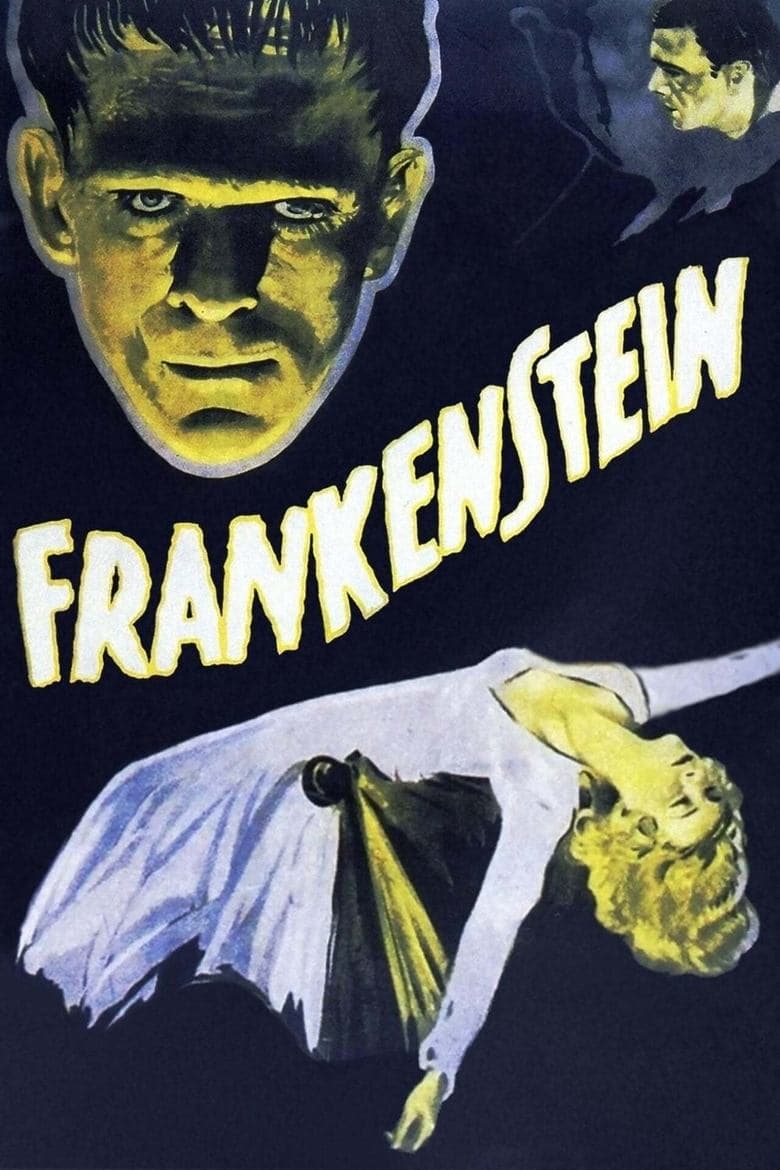
James Whale’s landmark horror film reimagines Mary Shelley’s gothic tale of scientific ambition and catastrophic creation. Obsessed with conquering death, Dr. Henry Frankenstein assembles a body from stolen parts and succeeds in bringing it to life, only to recoil from the being he has made. Boris Karloff’s iconic performance gives the Creature both physical terror and haunting pathos, turning the monster into a figure of fear, confusion, and tragic isolation. With its expressionistic sets, crackling laboratory imagery, and atmosphere of uncanny dread, Frankenstein helped define the visual and emotional language of classic horror cinema. It remains one of the foundational works of the genre.
Watch for
- The famous laboratory sequence, where lighting, machinery, and performance turn the act of creation into one of the defining images of early horror cinema.
- Karloff’s physical performance as the Creature, especially the way stiffness, confusion, and childlike vulnerability coexist with menace.
- James Whale’s use of expressionistic sets and shadowy interiors, which give the film a dreamlike and unsettling visual texture.
- How quickly the story shifts from scientific triumph to moral failure, revealing that the true horror lies not only in the Creature itself but in Frankenstein’s rejection of what he has made.
Production notes
Frankenstein was James Whale's adaptation of the 1927 Peggy Webling stage play (itself adapted from Mary Shelley's 1818 novel), produced by Carl Laemmle Jr. for Universal Pictures. The film established Universal's substantial 1930s monster-movie franchise — the Frankenstein cycle would extend across multiple sequel films including Bride of Frankenstein (1935), Son of Frankenstein (1939), and substantially more — and helped establish Universal as the dominant horror studio of the decade. The screenplay was credited to Garrett Fort and Francis Edward Faragoh (with additional adaptation by John L. Balderston). Colin Clive played Henry Frankenstein (the novel's Victor Frankenstein renamed for the film), with Mae Clarke as Elizabeth, John Boles as Victor Moritz, Edward Van Sloan as Doctor Waldman, and most significantly Boris Karloff as the Creature — Karloff's performance, in approximately three hours of daily makeup by makeup artist Jack Pierce, made the Creature one of the most iconic visual designs in cinema history. Cinematographer Arthur Edeson shot the film. Production cost approximately $262,000.
Trivia
- Boris Karloff's iconic Creature makeup — including the flat-topped head, the bolts on the neck, and the elevated forehead — was designed by makeup artist Jack Pierce and required approximately three hours of daily application; Pierce considered the design proprietary and protected its specifics throughout his career, and the resulting Creature look has been continuously imitated and licensed across decades.
- Boris Karloff was 44 when he made Frankenstein and had been working in Hollywood for approximately 25 years before his breakthrough; the Creature role established him as the dominant horror leading man of the 1930s, and his subsequent films including Bride of Frankenstein (1935), The Mummy (1932), and dozens of others extended a career that would last until his 1969 death.
- Frankenstein's substantial 1931 commercial success — grossing approximately $12 million on its $262,000 budget — helped save Universal Pictures from imminent bankruptcy during the Great Depression; the studio's substantial monster-movie cycle of the 1930s and 1940s was substantially built on Frankenstein's commercial foundation.
- The famous lakeside drowning sequence — in which the Creature accidentally drowns a young girl by throwing her into the lake, expecting her to float as the flowers had — was extensively cut from the film's American theatrical release after censorship concerns; the cut sequence was eventually restored in the 1986 home-video re-release after preservation work recovered the original footage.
- Frankenstein was a substantial influence on subsequent horror cinema; the film's specific approach to creating sympathetic monsters — establishing the Creature as both terrifying threat and tragically alienated outsider — has shaped subsequent horror work from Bride of Frankenstein (1935) through King Kong (1933) to contemporary work like The Shape of Water (2017).
Legacy
Frankenstein is widely regarded as the canonical American horror film of the 1930s and one of the foundational texts of the genre. It was selected for the National Film Registry in 1991. Boris Karloff's iconic Creature makeup has been continuously imitated and licensed across decades, becoming one of the most-recognized character designs in any cinema. The film's substantial 1931 commercial success — grossing approximately $12 million on its $262,000 budget — helped save Universal Pictures from imminent bankruptcy during the Great Depression and established the studio as the dominant horror-cinema producer of the 1930s and 1940s. The Frankenstein cycle extended across multiple sequel films — Bride of Frankenstein (1935, widely considered superior to the original), Son of Frankenstein (1939), and substantially more — establishing the franchise-film template decades before the term entered Hollywood vocabulary. The film's specific approach to creating sympathetic monsters has shaped subsequent horror work from Bride of Frankenstein through King Kong (1933) to contemporary work like The Shape of Water (2017). Among Universal monster films of the 1930s — Dracula (1931), The Wolf Man (1941), and The Mummy (1932) all major peers — Frankenstein remains the foundational text.