Fargo
Vibe
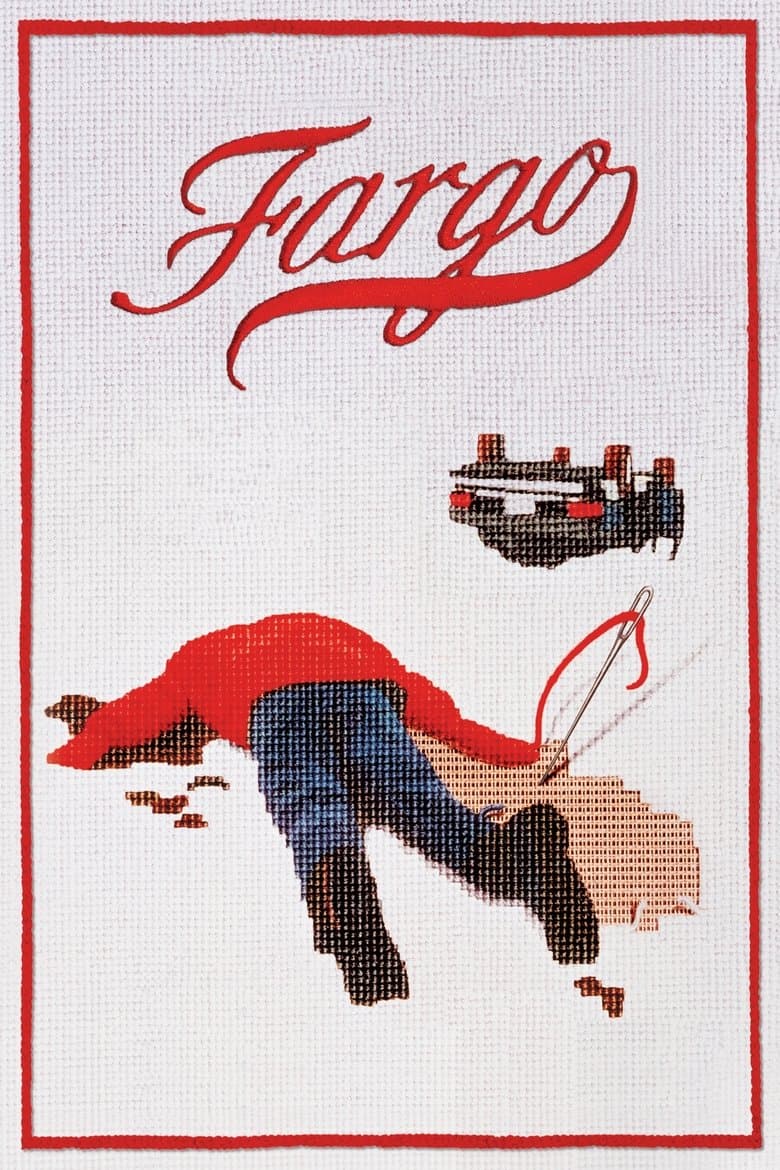
Joel and Ethan Coen’s darkly comic crime drama begins in the frozen landscapes of Minnesota and North Dakota, where a desperate car salesman sets in motion a kidnapping scheme he believes will solve his financial problems. Instead, the plan unravels into a chain of blunders, lies, and sudden violence that spreads far beyond his control. Frances McDormand’s Oscar-winning performance as police chief Marge Gunderson gives the film its moral center, balancing keen intelligence with quiet decency and wry humor. The Coens use the stark winter setting, regional speech, and abrupt brutality to create a tone that is at once absurd, unsettling, and deeply human. Fargo remains one of the defining American crime films of the 1990s.
Watch for
- How the Coens use snow, open roads, and blank white landscapes to create both visual beauty and a sense of emotional emptiness and dread.
- Frances McDormand’s performance, especially the way Marge’s warmth, politeness, and alert intelligence quietly dominate every scene she enters.
- The film’s precise shifts between humor and violence, where awkward conversation and comic timing can suddenly give way to real menace.
- The contrast between Jerry Lundegaard’s panicked dishonesty and Marge’s calm observational style, which turns the investigation into a clash between chaos and basic human decency.
Production notes
Fargo was the Coen Brothers' (Joel and Ethan) sixth feature film — the dark comedy crime drama set in their native upper Midwest, with the screenplay by both brothers. The film opens with a title card claiming it is based on a true story (a claim subsequently revealed to be entirely fictional — the Coens later said the claim was deliberate misdirection to enhance the film's moody-realist atmosphere). William H. Macy played Jerry Lundegaard, the desperate car-dealership manager whose plan to have his wife kidnapped for ransom unravels catastrophically; Frances McDormand played the pregnant Brainerd, Minnesota police chief Marge Gunderson. The cast included Steve Buscemi as Carl Showalter, Peter Stormare as Gaear Grimsrud, Harve Presnell as Wade Gustafson, Kristin Rudrüd as Jean Lundegaard, John Carroll Lynch as Norm Gunderson, and Steve Reevis as Shep Proudfoot. The film was shot extensively on location in Minnesota and North Dakota during a brutal winter, capturing the actual snow-covered landscape that gives the film its visual atmosphere. Cinematographer Roger Deakins shot the film (in his third Coen Brothers collaboration). Composer Carter Burwell contributed the score. Production cost approximately $7 million.
Trivia
- The film opens with a title card claiming it is based on a true story — a claim subsequently revealed to be entirely fictional; the Coen Brothers later said the claim was deliberate misdirection intended to enhance the film's moody-realist atmosphere, and that no actual events resembling the film's narrative had occurred.
- Frances McDormand is married to director Joel Coen; her casting as Marge Gunderson was Joel Coen's deliberate choice, and her performance won her the Academy Award for Best Actress — making her one of only a handful of performers to win Oscars while married to the film's director.
- The film's distinctive Minnesota-Upper-Midwest accent work — the characters' 'Minnesota nice' speaking patterns, with the 'oh yah' affirmations and the elongated vowels — was substantially the Coen Brothers' own ear for their native region; the brothers grew up in Minneapolis and St. Louis Park, Minnesota, and the accent work drew on their actual childhood linguistic environment.
- Steve Buscemi's distinctive performance as Carl Showalter — particularly the famous moment of his being fed into a wood chipper by Stormare's Grimsrud — has become permanent shorthand for the Coen Brothers' specific tonal register of black comedy embedded in violent action; the sequence has been continuously referenced and parodied across decades of subsequent media.
- Fargo won two Academy Awards — Best Actress (Frances McDormand) and Best Original Screenplay (Joel and Ethan Coen); the film received seven total nominations including Best Picture and Best Director, with the win establishing the Coen Brothers as major commercial filmmakers alongside their previous reputation as independent-prestige work.
Legacy
Fargo won two Academy Awards (Best Actress for Frances McDormand and Best Original Screenplay) on seven nominations including Best Picture and Best Director. It was selected for the National Film Registry in 2006. The film's distinctive tonal register — black comedy embedded in violent action, with the Coen Brothers' specific ear for Upper Midwestern speech patterns and visual landscape — established a template that would shape their subsequent decades of work, from The Big Lebowski (1998) to No Country for Old Men (2007) to Inside Llewyn Davis (2013). The FX television series Fargo (2014-present) developed by Noah Hawley — anthology-structured with new characters each season but maintaining the original film's regional setting, tonal register, and Coen Brothers' producing involvement — has become one of the most critically acclaimed American television series of the 2010s, with multiple Emmy and Golden Globe wins. Frances McDormand's Marge Gunderson — pregnant, methodical, morally uncomplicated against the surrounding moral chaos — has been continuously celebrated as one of the most enduringly admired female protagonists in 1990s American cinema.