Easy Rider
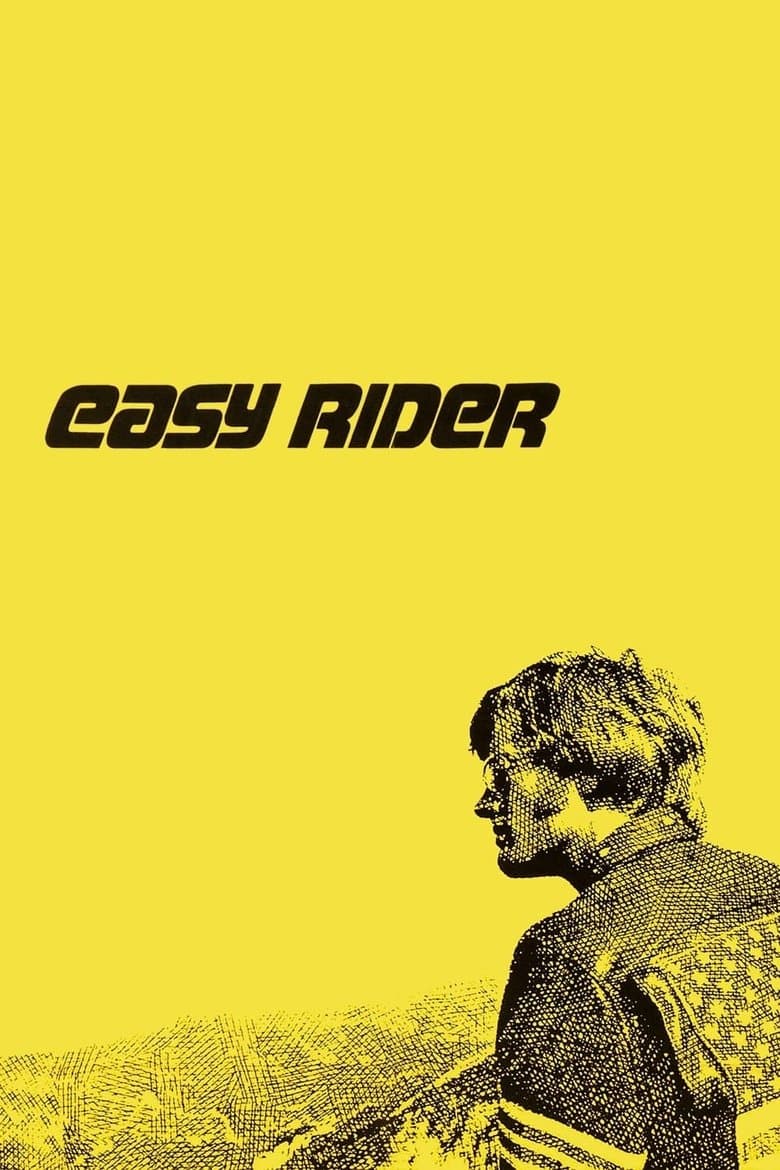
Vibe
Dennis Hopper’s counterculture road movie follows bikers Wyatt and Billy as they ride across the American Southwest after a drug deal, chasing freedom, money, and a vision of life outside conventional society. What begins as an open-road odyssey gradually becomes a confrontation with the hopes and hostilities of a country deeply divided at the end of the 1960s. Along the way, the men encounter communes, small-town suspicion, and a boozy lawyer played memorably by Jack Nicholson, each stop revealing a different face of America. With its loose narrative, rock soundtrack, and sun-struck landscapes, Easy Rider became a defining film of the counterculture and a major turning point in New Hollywood cinema.
Watch for
- How Hopper uses landscape and travel to make the American Southwest feel both liberating and increasingly ominous as the journey goes on.
- The film’s use of rock music, which does more than set the mood—it defines the rhythm, identity, and generational perspective of the story.
- Jack Nicholson’s performance as George Hanson, whose humor and sudden vulnerability deepen the film’s sense of possibility and danger.
- The contrast between the bikers’ dream of freedom and the reactions they provoke, which gradually turns the road movie into a darker reflection on intolerance and the limits of American openness.
Production notes
Easy Rider was Dennis Hopper's directorial debut — a deliberately low-budget independent production ($400,000) that became one of the founding texts of New Hollywood. The screenplay was credited to Hopper, Peter Fonda, and Terry Southern, though the actual writing was substantially shaped by extensive on-set improvisation. Fonda played Wyatt (called 'Captain America'), with Hopper as Billy and Jack Nicholson — in his breakthrough role — as the alcoholic Southern lawyer George Hanson. The film follows two motorcycle-mounted drug dealers traveling from Los Angeles toward New Orleans on the proceeds of a cocaine sale, encountering the actual social landscape of late-1960s America. The cast included Karen Black and Toni Basil as New Orleans prostitutes, Phil Spector in a brief cameo as the cocaine buyer, and Luke Askew as the hitchhiker. The film was shot largely guerrilla-style on actual American highways — Hopper's chaotic production style captured genuine American landscapes and incidental locals — and the now-famous soundtrack (Steppenwolf's 'Born to Be Wild,' The Byrds, Jimi Hendrix, and others) was assembled from existing tracks rather than commissioned for the film. Cinematographer László Kovács shot the film. Production cost approximately $400,000.
Trivia
- Jack Nicholson's breakthrough role as the alcoholic Southern lawyer George Hanson came after Rip Torn — Nicholson's initial casting — left the production following a violent on-set altercation with Dennis Hopper; Nicholson's substitution and his Oscar-nominated performance launched the career that would define American leading-man acting across the subsequent thirty years.
- The film was shot largely guerrilla-style on actual American highways — Dennis Hopper's chaotic production style captured genuine American landscapes and incidental locals — and the famous cemetery LSD sequence in New Orleans was reportedly shot during an actual Hopper LSD trip, with the actors substantially under the influence on camera.
- The now-famous soundtrack — Steppenwolf's 'Born to Be Wild,' The Byrds, Jimi Hendrix, Roger McGuinn, The Band, and others — was assembled from existing tracks rather than commissioned for the film; the approach was substantially cheaper than commissioning original music and established the licensed-music template that would shape subsequent decades of American cinema.
- Easy Rider grossed approximately $60 million worldwide on its $400,000 budget — one of the most profitable American films ever produced relative to its costs — and its commercial success demonstrated the viability of low-budget, youth-oriented, counterculture-themed cinema; the success directly opened the way to the subsequent New Hollywood era.
- Easy Rider received two Academy Award nominations — Best Supporting Actor (Jack Nicholson) and Best Original Screenplay (Hopper, Fonda, and Southern); the nominations established New Hollywood's legitimacy with the Academy and helped open the way to the subsequent decade of major awards-favored work by similar generational filmmakers.
Legacy
Easy Rider is one of the foundational texts of New Hollywood and one of the most thoroughly transformative American films of the late 1960s. It grossed approximately $60 million worldwide on its $400,000 budget — one of the most profitable American films ever produced relative to its costs. It received two Academy Award nominations and won none. It was selected for the National Film Registry in 1998. The film's commercial success demonstrated the viability of low-budget, youth-oriented, counterculture-themed cinema and directly opened the way to the subsequent New Hollywood era — Bonnie and Clyde (1967) and Easy Rider (1969) are regularly cited as the bookend texts of the moment when American studio filmmaking shifted from the established prestige-and-musical tradition to the morally complex, generationally-conscious approach that would dominate the next decade. The now-famous soundtrack established the licensed-music template that would shape subsequent decades of American cinema. Among American road films, Easy Rider sits alongside The Last Detail (1973), Five Easy Pieces (1970), and Two-Lane Blacktop (1971) as the canonical late-1960s and early-1970s American treatments of road-as-existential-territory.