Double Indemnity
Vibe
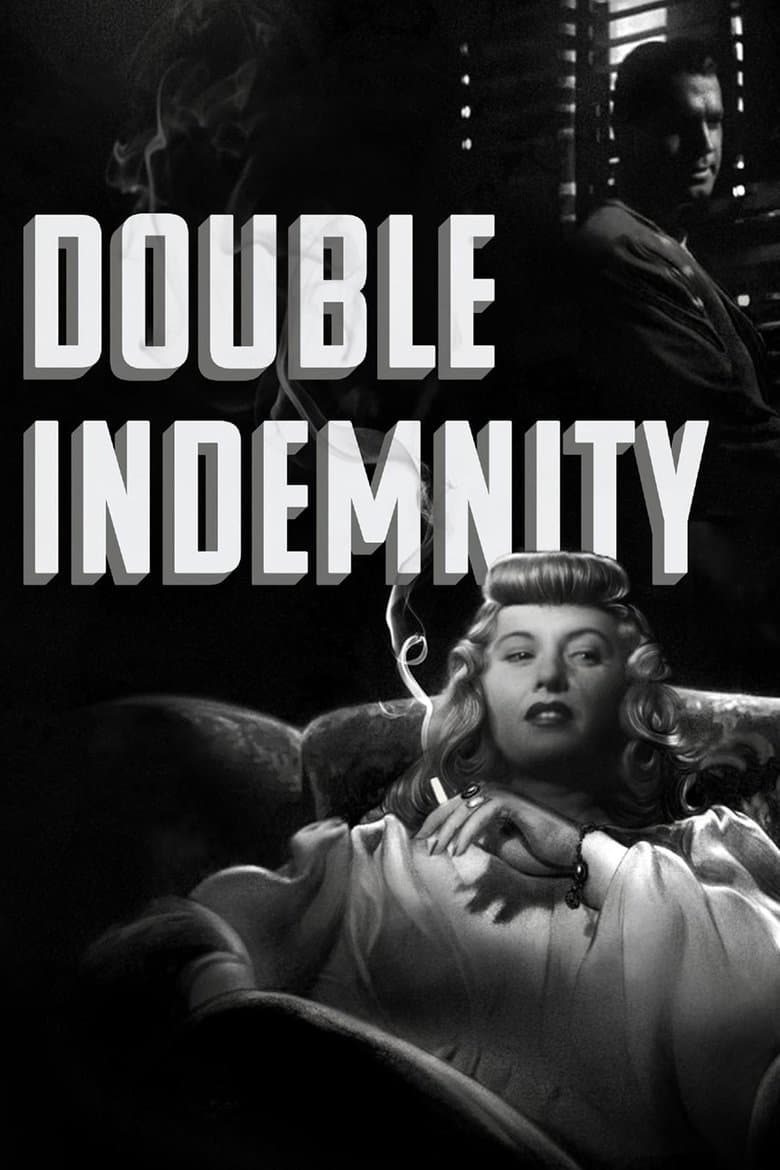
Billy Wilder’s classic film noir follows insurance salesman Walter Neff, who is drawn into a deadly scheme by the alluring and calculating Phyllis Dietrichson. Together they plot the murder of her husband in order to collect a lucrative double-indemnity payout, convinced they can outsmart both the police and the insurance company. But as suspicion tightens and mistrust grows between them, their seemingly perfect crime begins to unravel. Fred MacMurray and Barbara Stanwyck deliver iconic performances, while Wilder’s razor-sharp script and shadowy visual style helped define the look and tone of film noir. A gripping tale of greed, desire, and moral collapse, Double Indemnity remains one of the genre’s foundational masterpieces.
Watch for
- Barbara Stanwyck’s performance as Phyllis Dietrichson, whose charm, calculation, and menace make her one of cinema’s definitive femme fatales.
- The film’s voiceover structure and confession framing, which create a sense of doom from the very beginning.
- John F. Seitz’s shadow-heavy black-and-white cinematography, especially the use of blinds, darkness, and confined spaces to heighten tension.
- The cat-and-mouse dynamic between Walter Neff and claims investigator Barton Keyes, where loyalty, suspicion, and intelligence collide.
Production notes
Double Indemnity was Billy Wilder's adaptation (with co-screenwriter Raymond Chandler) of James M. Cain's novella, originally serialized in Liberty magazine in 1936. The Cain-Chandler-Wilder combination of three of the era's most distinguished crime-fiction voices produced one of the most literarily refined screenplays of any 1940s American film. Wilder shot the film on a relatively modest Paramount budget, with extensive use of hard-shadowed interior cinematography that helped establish the visual vocabulary of film noir. Fred MacMurray played the doomed insurance salesman Walter Neff against type — MacMurray was best known for romantic-comedy roles, and his casting as a morally compromised murderer was a deliberate creative shock. Barbara Stanwyck played Phyllis Dietrichson, with Edward G. Robinson as the claims investigator Barton Keyes — a role that deliberately inverted Robinson's usual gangster-villain persona. The cast included Jean Heather as Lola Dietrichson, Tom Powers as Mr. Dietrichson, and Byron Barr as Nino Zachetti. Cinematographer John F. Seitz shot the film. Composer Miklós Rózsa contributed the iconic score. Production cost approximately $920,000.
Trivia
- Fred MacMurray was best known for romantic-comedy roles before Double Indemnity; his casting as the morally compromised murderer Walter Neff was a deliberate creative shock from Wilder, and MacMurray reportedly hesitated to take the role for fear it would destroy his career — though the performance ultimately gave him his most enduring dramatic credit.
- Raymond Chandler co-wrote the screenplay with Billy Wilder; their working relationship was famously contentious — Chandler reportedly hated working with Wilder and threatened to quit multiple times — but the combination of two of the era's greatest crime-fiction voices produced one of the most literarily refined American screenplays.
- James M. Cain's source novella was based on a real 1927 murder case — the Snyder-Gray murder, in which Ruth Snyder and her lover Henry Judd Gray killed Snyder's husband for insurance money; both real-life perpetrators were executed at Sing Sing in January 1928, and the case had remained sensational throughout the 1930s.
- The film's relentlessly dark tone — including an original ending in which Walter Neff is executed in San Quentin's gas chamber — was substantially toned down by the Production Code Administration; the gas chamber sequence had actually been filmed but was cut from the final release print, which ends with Neff's confession monologue and an offscreen wait for police arrival.
- Double Indemnity received seven Academy Award nominations including Best Picture, Best Director, Best Actress (Stanwyck), and Best Adapted Screenplay; it won none, with the categories swept by Going My Way (Best Picture) and Wilson (Best Adapted Screenplay) in one of the more contested years of 1940s Oscars.
Legacy
Double Indemnity is widely considered one of the canonical films of American film noir and one of the foundational texts of the genre. It received seven Academy Award nominations (winning none) but its critical reputation has only grown across decades. It was selected for the National Film Registry in 1992. The Cain-Chandler-Wilder combination of three of the era's most distinguished crime-fiction voices produced one of the most literarily refined American screenplays of the 1940s, regularly cited as a high-water mark of the form. Barbara Stanwyck's Phyllis Dietrichson is one of the canonical femme fatale performances in American cinema, alongside Mary Astor's Brigid O'Shaughnessy in The Maltese Falcon. The film's influence on subsequent American noir has been extensive — Body Heat (1981) was an explicit homage, The Postman Always Rings Twice (1981) drew from the same Cain source novel, and noir-pastiche films from L.A. Confidential to Sin City have directly invoked Double Indemnity's specific visual language. Among 1944 films released, Double Indemnity remains the most thoroughly influential as ongoing genre-template.